

The smallest causes often create the biggest disruptions—and few examples prove this better than ear wax blockage.
Millions of people experience muffled hearing, ear pressure, ringing sounds, or unexplained discomfort without realizing that the cause may be something surprisingly simple. Ear wax blockage is one of the most common yet misunderstood hearing problems worldwide. Despite affecting children, working professionals, hearing aid users, and older adults, it is often overlooked until symptoms become impossible to ignore.
What makes this condition particularly fascinating is that the very substance responsible for the problem is also essential for healthy hearing. Ear wax, medically known as cerumen, is not a sign of poor hygiene. It is a highly specialized protective material produced by the body to defend the ears against dust, bacteria, fungi, insects, and environmental pollutants.
The human ear has spent thousands of years evolving a remarkably effective self-protection system. Ear wax serves as a natural cleaner, lubricant, and infection barrier, working around the clock without conscious effort. In most cases, the ear removes excess wax on its own through a sophisticated self-cleaning mechanism that relies on normal jaw movements such as talking, chewing, and yawning.
Problems arise when this natural process is disrupted. Modern habits such as frequent earbud use, hearing aids, cotton swab cleaning, and prolonged exposure to dusty environments have contributed to increasing rates of ear wax blockage across all age groups.
Studies suggest that impacted ear wax affects millions of individuals annually. It is estimated to affect approximately 10% of children, 5% of healthy adults, and up to one-third of older adults and hearing aid users. Yet despite its prevalence, many people remain unaware of the warning signs, risk factors, and safe treatment options available.
Understanding ear wax blockage is not simply about maintaining ear hygiene. It is about protecting hearing, recognizing symptoms early, avoiding harmful misconceptions, and appreciating one of the body’s most remarkable natural defense systems.
Did You Know?
The human ear naturally moves ear wax outward without assistance. In healthy ears, jaw movements from talking and chewing help carry old wax away from the eardrum in a continuous self-cleaning process.”
The Strange Science of Ear Wax
Ear wax is composed of secretions from ceruminous and sebaceous glands mixed with shed skin cells, hair, and microscopic environmental particles. This combination creates the familiar substance found inside the ear canal.
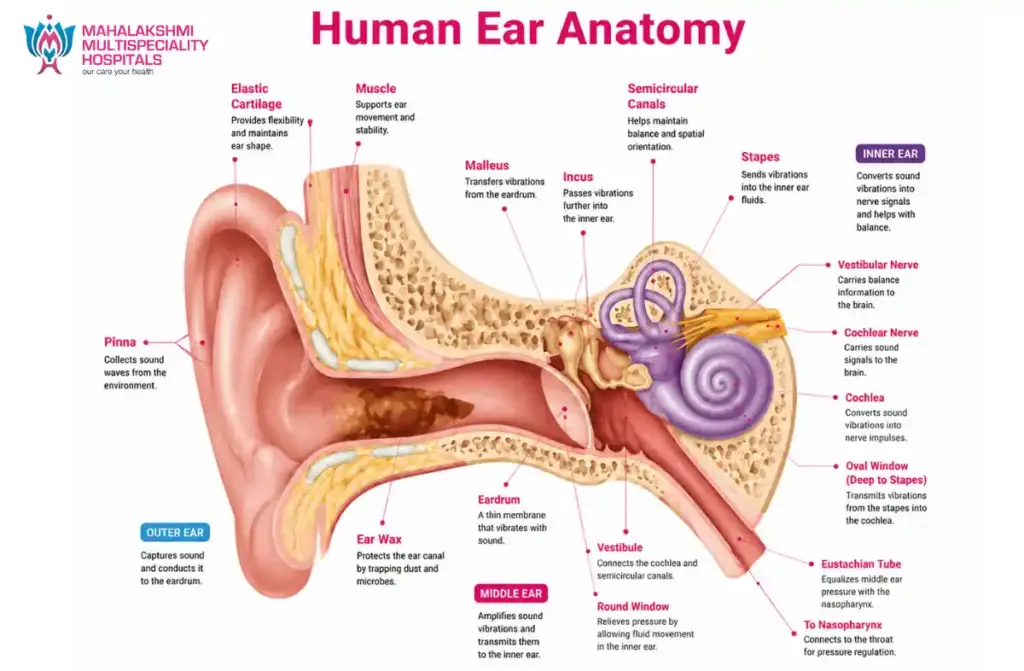
One of the most fascinating aspects of ear wax is that it exists in two primary forms: wet and dry.
Wet ear wax is typically yellow to brown and has a sticky consistency. Dry ear wax tends to be grayish and flaky. The type a person has is largely determined by genetics.
Scientists have identified a specific gene known as ABCC11 that influences ear wax type. Individuals carrying one genetic variation usually produce wet ear wax, while another variation results in dry ear wax. This same gene is associated with certain body odor characteristics, making ear wax a surprisingly useful marker in genetic research.
Anthropologists have used ear wax genetics to study human migration patterns and population evolution. Variations in ear wax type have helped researchers trace ancestral movements across continents and better understand how different populations adapted to environmental conditions over thousands of years.
The composition of ear wax can also provide clues about ear canal health. Changes in texture, color, or consistency may sometimes reflect inflammation, infection, or altered gland function.
How the Ear Cleans Itself Without Your Help
One of the most remarkable features of the ear is its self-cleaning ability.
Unlike many other parts of the body, the ear canal possesses a natural migration system. Skin cells within the ear canal gradually move outward from the eardrum toward the external opening. Ear wax travels along with this movement, carrying trapped particles away from sensitive inner structures.
This process is often described as a biological conveyor belt.
Everyday activities contribute significantly to this mechanism. Talking, chewing, yawning, laughing, and other jaw movements create subtle changes in the shape of the ear canal. These movements help push wax toward the outer ear where it can naturally fall out or be gently removed during routine washing.
For most healthy individuals, this system functions efficiently throughout life. Problems often arise when people attempt to “help” the process by inserting objects into the ear.
Cotton swabs, hairpins, keys, fingernails, and other objects frequently push wax deeper into the canal rather than removing it. Over time, repeated interference disrupts natural migration and increases the risk of blockage.
When Ear Wax Stops Being Helpful
Although ear wax serves important protective functions, problems occur when excessive accumulation prevents normal sound transmission or obstructs the ear canal.
This condition is known as impacted ear wax.
Impaction develops gradually. Small amounts of wax accumulate over weeks, months, or even years. During this period, many individuals experience no symptoms at all.
The surprising aspect of ear wax blockage is that symptoms often appear suddenly. A person may feel completely normal one day and notice significant hearing reduction the next.
This frequently occurs when water enters the ear during bathing or swimming. The wax absorbs moisture, expands, and suddenly occupies enough space to obstruct the ear canal.
It is important to distinguish between normal wax accumulation and true medical blockage. Many people have visible ear wax without experiencing any problems. Treatment becomes necessary primarily when symptoms develop or when the wax prevents proper examination of the ear.
The Hidden Causes Behind Ear Wax Blockage
Several factors increase the likelihood of developing impacted ear wax.
Cotton swabs remain one of the leading causes. Rather than extracting wax, they often compress it deeper into the canal where it becomes increasingly difficult to remove.
Modern lifestyles have introduced additional risk factors. Earbuds and headphones occupy the ear canal for extended periods, potentially disrupting natural ventilation and wax migration. Their widespread use has coincided with growing reports of wax-related complaints among younger adults.
Hearing aids present a similar challenge. By partially obstructing the ear canal, they can alter wax movement and contribute to accumulation over time.
Regular use of earplugs, whether for sleep, noise reduction, or occupational protection, may produce comparable effects.
Certain individuals are predisposed due to anatomy. Naturally narrow ear canals provide less space for wax migration. Excessive ear canal hair can trap wax and interfere with its outward movement.
Skin disorders such as eczema, psoriasis, and dermatitis may affect wax production and alter the condition of the ear canal lining. Environmental factors also play a role. Workers exposed to dust, debris, and airborne particles may experience increased wax production as the ear attempts to protect itself.
The Earbud Generation and Rising Ear Problems
Wireless earbuds have transformed the way people consume music, attend virtual meetings, and communicate throughout the day.
However, prolonged earbud use may influence ear health in unexpected ways.
When earbuds remain in place for extended periods, they reduce airflow within the ear canal and create conditions that may encourage wax accumulation. Repeated insertion and removal can also push wax deeper into the canal.
Audiologists increasingly report wax-related concerns among younger individuals who spend many hours daily using wearable audio devices.
Although earbuds themselves do not directly create ear wax, they may contribute to conditions that favor blockage. As wearable technology continues evolving, ear health specialists anticipate greater emphasis on preventive education and proper device hygiene.
Warning Signs People Commonly Misinterpret
Ear wax blockage is often overlooked because its symptoms resemble those of many other conditions.
Some individuals attribute hearing changes to fatigue, stress, aging, allergies, or temporary congestion. Others assume symptoms will resolve spontaneously.
Muffled hearing may be mistaken for a lingering cold. Ringing sounds may be blamed on workplace stress or lack of sleep. Intermittent symptoms are frequently ignored because they appear to improve temporarily.
This misunderstanding often delays diagnosis and treatment.
Recognizing that seemingly minor hearing changes may originate from something as simple as ear wax blockage can help individuals seek appropriate evaluation sooner.
“A person may spend weeks believing they have allergies, a lingering cold, or temporary hearing fatigue, only to discover that a simple ear wax blockage was reducing sound transmission the entire time.”
The Symptoms That Demand Attention
While ear wax blockage is often harmless and easily treatable, certain symptoms should never be ignored.
Partial hearing loss is the most common complaint. Sounds may seem distant, muffled, or less clear than usual. Many people describe the sensation as listening through a wall or wearing invisible earplugs.
A feeling of fullness or pressure inside the ear is another frequent symptom. Some individuals experience persistent discomfort, while others notice only occasional irritation.
Tinnitus, commonly described as ringing, buzzing, humming, or whistling sounds in the ear, may develop when impacted wax interferes with normal sound transmission. In some cases, removal of the blockage significantly improves these symptoms.
Persistent itching can occur when wax accumulates against the sensitive skin lining the ear canal. Dizziness and balance disturbances may also develop, particularly when blockage affects pressure perception within the ear.
One lesser-known symptom is reflex coughing. The ear canal contains branches of the vagus nerve, and stimulation from impacted wax can occasionally trigger a cough reflex.
Certain warning signs require prompt medical evaluation. Severe pain, ear drainage, bleeding, sudden hearing loss, facial weakness, or symptoms accompanied by fever may indicate conditions more serious than simple wax buildup and should be assessed immediately.
How Ear Wax Blockage Affects Different Age Groups
Children
Children frequently develop ear wax blockage because their ear canals are smaller and more easily obstructed.
Hearing difficulties caused by wax may affect language development, listening skills, and classroom performance. Young children may not always communicate hearing problems clearly, making recognition more challenging for parents.
Behavioral signs can include inattentiveness, increased television volume, asking for repetition, or seeming unusually distracted during conversations.
Teenagers
Modern teenagers face unique risks due to widespread headphone and earbud use.
Many teenagers also experiment with unsafe cleaning practices promoted through social media videos and online trends. These methods often increase the likelihood of wax impaction rather than preventing it.
Repeated insertion of objects into the ear can create irritation, inflammation, and deeper wax accumulation.
Young Adults
Young adults frequently use headphones for work, entertainment, fitness, and communication. Extended device use may contribute to gradual wax buildup that goes unnoticed for long periods.
Reduced hearing clarity can affect productivity, concentration, and communication in professional environments. Because hearing problems are often associated with older age, many young adults fail to consider wax blockage as a possible explanation.
Middle-Aged Adults
Occupational exposures become increasingly important during middle age. Individuals working in dusty environments, manufacturing facilities, construction sites, and industrial settings may experience increased wax production due to continuous exposure to airborne particles.
Changes in skin health, gland function, and ear canal anatomy may also begin influencing wax accumulation patterns during this stage of life.
Older Adults
Ear wax blockage becomes significantly more common with advancing age.
Several factors contribute to this trend. Ear wax often becomes drier and harder over time, making natural migration less efficient. Age-related changes in the ear canal can further impair self-cleaning mechanisms.
Hearing aid use introduces additional challenges. Devices may physically obstruct wax movement while simultaneously increasing awareness of hearing changes caused by blockage.
For older adults, untreated ear wax blockage can contribute to communication difficulties, social withdrawal, frustration, and reduced quality of life.
The Silent Impact on Everyday Life
Many people underestimate the effect ear wax blockage can have on daily functioning.
Conversations become more difficult to follow, particularly in noisy environments. Individuals may repeatedly mishear instructions, names, numbers, or important details.
In professional settings, reduced hearing clarity can affect productivity and increase the likelihood of communication errors. Employees may expend additional mental effort trying to interpret conversations, leading to listening fatigue.
Relationships may also suffer. Family members sometimes mistake hearing difficulties for inattention or disinterest, creating unnecessary misunderstandings.
Social situations can become increasingly stressful. Individuals who struggle to hear clearly may avoid gatherings, meetings, restaurants, or group conversations.
Over time, persistent hearing difficulties may affect confidence, emotional well-being, and overall quality of life.
The Most Dangerous Myths About Ear Wax
Numerous misconceptions continue to influence ear-care habits worldwide.
One of the most common myths is that ear wax indicates poor hygiene. In reality, healthy wax production is a sign that the ear’s protective systems are functioning normally.
Another widespread belief is that cotton swabs safely clean the ears. Medical evidence consistently shows that swabs often push wax deeper into the canal, increasing blockage risk.
Ear candling remains popular in some communities despite lacking scientific support. Research has found no reliable evidence that ear candling effectively removes wax. More importantly, it can cause burns, wax deposits, and ear injuries.
Many people assume that hearing loss automatically results from aging. While age-related hearing changes are common, impacted ear wax remains one of the simplest and most treatable causes of reduced hearing.
Another misconception is that every ear requires routine cleaning. Most healthy ears clean themselves naturally and require minimal intervention.
Finally, many home remedies are considered harmless simply because they are widely shared online. Unfortunately, some methods can worsen blockage or damage delicate ear structures.
What Happens When Ear Wax Blockage Is Ignored
Although impacted ear wax is rarely dangerous, prolonged neglect can create ongoing problems.
Progressive hearing impairment may interfere with communication and daily activities. Individuals often adapt gradually to hearing changes, delaying treatment for months or even years.
Wax accumulation can trap moisture and debris, increasing the likelihood of ear canal inflammation and infection.
Persistent tinnitus may become increasingly bothersome over time. Some individuals also experience recurrent dizziness, balance disturbances, and discomfort.
Communication difficulties can affect educational performance, workplace effectiveness, and social participation. For older adults, these effects may be particularly significant because they can compound existing hearing challenges.
In individuals with pre-existing hearing loss, untreated wax blockage may further reduce hearing ability and limit the effectiveness of hearing devices.
When Ear Wax Is Not the Real Problem
Not every blocked-ear sensation is caused by ear wax.
Several medical conditions can produce remarkably similar symptoms.
Middle ear infections frequently cause fullness, hearing reduction, and discomfort. Fluid accumulation behind the eardrum may also create sensations of blockage despite a clear ear canal.
Eardrum abnormalities, including perforations and scarring, can alter hearing and pressure perception.
Sudden sensorineural hearing loss represents a medical emergency that may initially resemble simple blockage. Unlike wax impaction, this condition requires urgent evaluation and treatment.
Chronic ear diseases, tumors, and structural abnormalities can also mimic wax-related symptoms.
Accurate diagnosis is therefore essential. Assuming every hearing change is caused by wax may delay recognition of more serious disorders.
How Professionals Diagnose Ear Wax Blockage
Diagnosis usually begins with a detailed history and physical examination.
Healthcare professionals use an otoscope, a specialized instrument equipped with magnification and illumination, to visualize the ear canal and eardrum.
This examination allows clinicians to determine the location, consistency, and severity of wax accumulation. It also helps identify infections, inflammation, injuries, and other abnormalities.
In some cases, hearing tests may be recommended to assess the degree of hearing impairment and determine whether additional conditions are present.
Careful evaluation ensures that symptoms are correctly attributed to wax buildup rather than more serious causes.
Modern Treatment Options
Several effective treatments are available for impacted ear wax.
Ear-softening drops are often used as an initial approach. These solutions help break down hardened wax, making removal easier and more comfortable.
Irrigation involves flushing the ear canal with controlled streams of water. While effective for many patients, it may not be appropriate for everyone, particularly individuals with eardrum abnormalities or certain ear conditions.
Microsuction has become increasingly popular among ear specialists. Using magnification and gentle suction, clinicians can remove wax with excellent precision and visibility.
Manual extraction may also be performed using specialized instruments designed to safely remove wax under direct visualization.
The most appropriate treatment depends on factors such as wax consistency, patient age, ear anatomy, medical history, and the presence of associated conditions.
The Future of Ear Care
Technological innovation continues to improve ear-care practices.
Modern microsuction systems provide greater precision, enhanced patient comfort, and improved safety.
High-definition digital imaging allows specialists to obtain detailed views of the ear canal and eardrum, supporting more accurate diagnosis and treatment planning.
Portable diagnostic devices are expanding access to ear assessments in primary care settings and remote communities.
Telehealth services may increasingly facilitate preliminary evaluations, allowing healthcare providers to determine whether in-person treatment is necessary.
Emerging technologies promise safer, faster, and more personalized approaches to managing ear wax-related problems.
Who Faces the Highest Risk of Recurrent Blockage?
Certain groups experience repeated wax buildup more frequently than others.
Hearing aid users often develop recurrent blockage because devices alter natural wax migration.
Frequent earbud users may face similar challenges due to prolonged canal obstruction.
Individuals with eczema, dermatitis, psoriasis, and other skin disorders frequently experience changes in wax production and ear canal health.
Older adults remain among the highest-risk populations because of age-related changes in wax consistency and self-cleaning efficiency.
People who naturally produce large amounts of ear wax, workers exposed to dusty environments, and individuals with narrow ear canals may also require periodic monitoring and professional cleaning.
Prevention Strategies That Actually Work
The most effective prevention strategy is surprisingly simple: allow the ear to perform its natural cleaning function.
Avoid inserting cotton swabs, hairpins, fingers, or other objects into the ear canal. These items often create more problems than they solve.
Maintain good hygiene by cleaning only the outer ear with a washcloth during routine bathing.
Hearing aids, earbuds, and ear protection devices should be cleaned regularly according to manufacturer recommendations to reduce contamination and minimize wax-related complications.
Individuals who experience recurring blockage may benefit from periodic professional evaluations.
Most importantly, recognize early symptoms. Addressing hearing changes, fullness, or persistent discomfort before severe blockage develops can simplify treatment and reduce complications.If you’re wondering how to remove ear wax blockage fast at home, certain methods such as using ear drops or warm water irrigation might provide quick relief. However, it’s important to be cautious and avoid inserting objects into the ear canal, as this can worsen the condition.
Final Insight: The Goal Is Not Removing Ear Wax—It Is Maintaining Healthy Ears
For generations, ear wax has been treated as something dirty, unwanted, and in need of constant removal. Modern science tells a very different story.
Ear wax is not a mistake made by the body. It is one of nature’s most effective protective tools. Every day, it traps harmful particles, prevents infections, lubricates delicate tissues, and helps maintain the health of the ear canal. Without it, the ears would be significantly more vulnerable to irritation, injury, and disease.
The real problem is not ear wax itself. The problem occurs when natural movement of wax is disrupted and accumulation becomes excessive enough to interfere with hearing or ear health. Understanding this distinction is the foundation of proper ear care.
Many cases of ear wax blockage are preventable. Avoiding cotton swabs, limiting unnecessary insertion of objects into the ear canal, maintaining hearing devices properly, and recognizing symptoms early can dramatically reduce the risk of complications.
Perhaps the most important lesson is this: healthy ears are not wax-free ears.
The healthiest ears are those allowed to function as nature intended, supported by evidence-based care when intervention becomes necessary. Whether you are a parent concerned about a child’s hearing, a young adult using earbuds every day, a professional working in dusty environments, or an older adult managing hearing aids, understanding how ear wax works can help protect one of your most valuable senses.
Hearing connects us to conversations, relationships, opportunities, and experiences. Something as seemingly insignificant as ear wax should never be underestimated. When understood and managed correctly, it serves as a silent guardian of hearing health throughout life.
The goal is not to eliminate ear wax. The goal is to preserve the delicate balance that keeps the ears healthy, functional, and capable of connecting us to the world for decades to come.