Safety Rate
Safety Rate
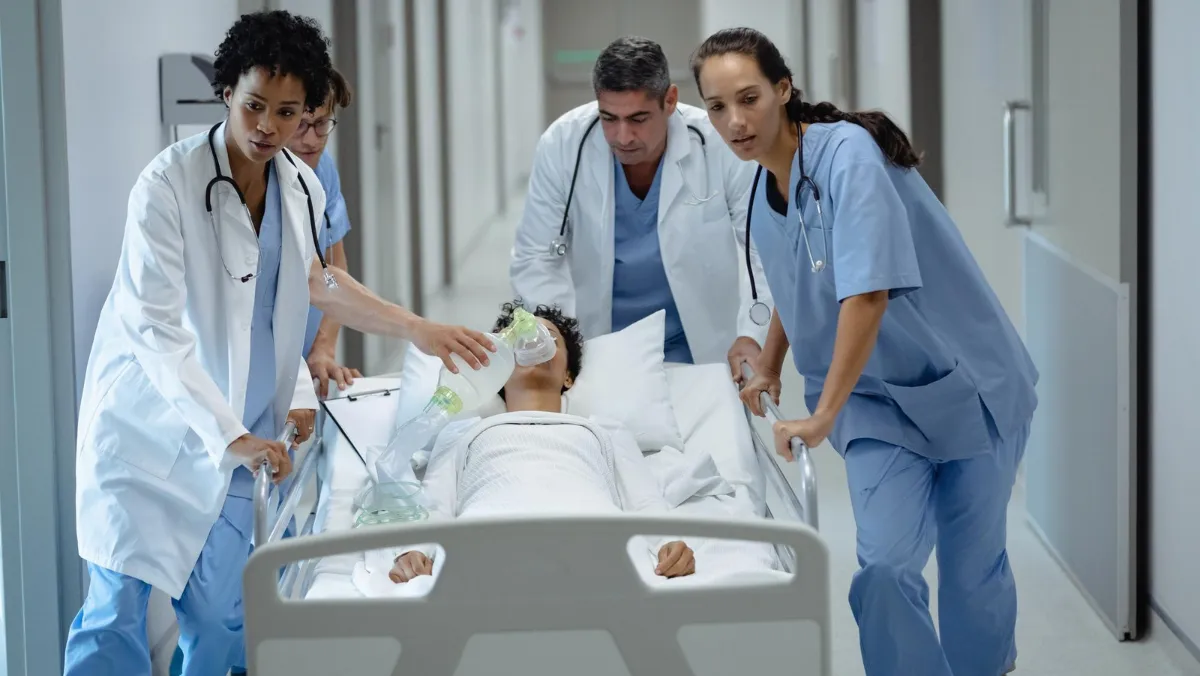
When a medical emergency happens, every minute matters. At Mahalakshmi Multispeciality Hospital, our Accident, Emergency and Trauma Care department is built to give you fast, reliable, and compassionate care at the right time. Whether it is a road accident, a sudden health crisis, or a serious injury, our team is ready around the clock to help you and your family.
We serve patients from Ulundurpet, Kallakurichi, and the surrounding areas within a 40 to 50 km radius. Our goal is simple — bring quality emergency care close to home, so no one has to travel far when they need help the most.
Emergencies do not follow a schedule. That is why our Accident, Emergency and Trauma Care unit stays open every hour of every day, including weekends and public holidays. From the moment a patient arrives, our trained staff begins the assessment process without delay.
We have a dedicated emergency bay that is separate from regular OPD, so incoming emergency cases receive immediate attention. Our triage system helps us quickly identify who needs urgent care and prioritize accordingly. The team on duty includes trained emergency medical officers, skilled nurses, and supporting staff who work together as one unit. No waiting in long queues, no confusion — just fast, focused care from the first minute.
For families in Ulundurpet and across Kallakurichi district, this kind of round-the-clock support means you always have a trusted hospital to turn to, no matter what time a crisis occurs.
Trauma care involves more than just treating a visible injury. It means stabilizing the patient, managing pain, preventing further damage, and planning the next steps of treatment — all at the same time.
Our trauma team follows a structured approach for every case. When a trauma patient arrives, we assess the airway, breathing, and circulation first. These are the three things that keep a person alive, and we act on them within seconds. From there, the team moves to wound care, fracture management, internal injury assessment, and other critical needs.
For serious trauma cases, our intensive care backup ensures that patients who need close monitoring are shifted to the ICU quickly. We also have an operation theatre that can be activated for emergency surgeries when required. The combination of emergency stabilization and surgical backup makes our trauma management approach comprehensive and effective.
Accurate diagnosis is the foundation of good emergency care. Without knowing what is wrong inside the body, even the best doctors cannot treat a patient correctly. At Mahalakshmi Hospital, our emergency team has direct access to in-house diagnostic services that work around the clock.
Our facility includes a Siemens 32-slice CT scanner, which is one of the most advanced imaging tools available in this region. CT scans help detect internal bleeding, brain injuries, spinal damage, and chest or abdominal trauma within minutes. We also have GE ultrasound, digital X-ray, and a fully equipped laboratory for blood tests and other investigations.
This means patients in our Accident, Emergency and Trauma Care unit do not need to be referred elsewhere for imaging. Everything happens under one roof, which saves valuable time and reduces the stress on patients and their families.
A major advantage of being a multispeciality hospital is that we have specialists from different departments available to step in during emergencies. When a road accident patient arrives with a fractured bone, a head injury, and internal bleeding, one doctor alone cannot manage everything. A team is needed.
Our emergency team works alongside orthopedic surgeons, general surgeons, neurologists, cardiologists, and anesthesiologists — all within the same hospital. When a patient needs specialist input, there is no need to transfer to another facility. The right doctor comes to the patient.
This collaborative setup is what makes our Accident, Emergency and Trauma Care department reliable for complex and multi-system injuries. Families in Kallakurichi and Ulundurpet can trust that their loved ones will receive coordinated, expert-level attention right here.
Poisoning emergencies can happen due to accidental ingestion of household chemicals, medication overdose, consumption of contaminated food, or exposure to pesticides — which is particularly relevant in agricultural regions like Kallakurichi.
When a poisoning case arrives, our team acts quickly to assess the type and amount of substance involved, check the patient's airway and oxygen levels, and begin decontamination or antidote treatment as appropriate. Gastric lavage, activated charcoal, and supportive care are available immediately.
We also manage snake bite cases and other envenomation emergencies, which are not uncommon in rural Tamil Nadu. The availability of anti-snake venom and a team experienced in managing such cases makes our hospital a safe destination for these emergencies.
Families in Ulundurpet, Kallakurichi, and neighboring villages can rely on us for prompt and effective poisoning and toxicology care without the need to travel to a distant city.
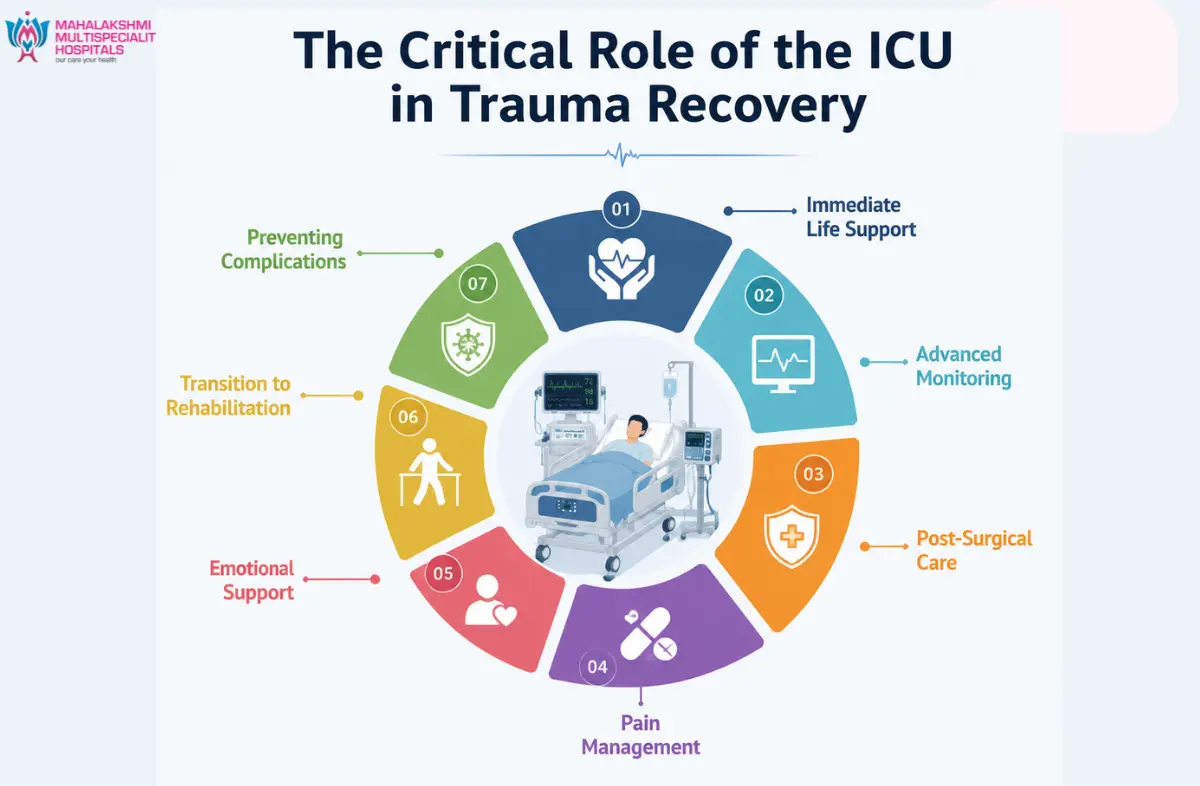
Some patients who arrive through the emergency department need more than stabilization — they need continuous monitoring and life support. Our Intensive Care Unit is equipped to manage such patients with the attention and technology they require.
The ICU at Mahalakshmi Hospital has ventilator-equipped beds for patients who cannot breathe independently. Our critical care team monitors heart rate, blood pressure, oxygen levels, and other vital signs without interruption. Intravenous medications, nutritional support, and specialized nursing care are all part of the ICU routine.
Patients recovering from major trauma, post-surgery complications, severe infections, or organ failure are managed here until they are stable enough to be shifted to a general ward. The smooth transition between the emergency department and the ICU is one of the reasons our Accident, Emergency and Trauma Care outcomes are consistently positive.
Good emergency care begins before the patient reaches the hospital. Our ambulance service is available to receive calls and dispatch quickly to the location of an emergency. The ambulance is equipped with basic life support tools, oxygen, and trained staff who can begin stabilization on the way to the hospital.
For families in remote areas near Ulundurpet and Kallakurichi, having an ambulance service that can reach them quickly makes a real difference. It reduces the risk of complications that can arise when a patient is transported without proper care.
When the ambulance team contacts the hospital while in transit, our emergency department prepares in advance. By the time the patient arrives, the emergency bay, required equipment, and attending team are all ready. This pre-hospital coordination reduces the time to treatment and improves the overall outcome for critical cases.
At Mahalakshmi Multispeciality Hospital, Accident, Emergency and Trauma Care is not just a department — it is a commitment. A commitment to be available when you need us the most, to act quickly without compromising on quality, and to treat every patient with the same care and respect we would want for our own families.
Since our founding in 2000, we have grown from a small clinic in Ulundurpet into a trusted 50-bed multispeciality hospital serving thousands of families across Kallakurichi district. Our emergency and trauma unit reflects that growth — with modern equipment, a skilled multi-specialty team, 24/7 availability, and a patient-first approach that has earned the trust of this community over more than two decades.
If you or someone you love needs emergency care in Ulundurpet or Kallakurichi, do not hesitate. Come to Mahalakshmi Hospital or call our ambulance service. We are here, and we are ready.
Emergency and trauma care is the branch of medicine that handles urgent medical situations, including accidents, heart attacks, strokes, and other life-threatening conditions. It involves the immediate assessment, stabilization, and treatment of patients to reduce mortality and improve recovery. Emergency rooms operate 24/7 with trained physicians, nurses, and support staff ready to provide rapid care. The goal is to offer timely interventions during critical moments, minimizing damage and enhancing patient outcomes in unpredictable situations.
Accident and trauma refer to sudden events that cause physical injuries requiring urgent medical care. These may result from vehicle collisions, falls, industrial mishaps, or violent incidents. Trauma can affect multiple body systems simultaneously, leading to complex medical emergencies. Immediate evaluation and treatment by trauma teams are essential to stabilize the patient, prevent complications, and initiate recovery. Trauma care also includes emotional support and rehabilitation to address both physical and psychological effects of injury.
Trauma care refers to specialized medical treatment provided to individuals who have sustained serious injuries due to accidents or violent events. This care begins from the moment of injury, involving emergency services, trauma centers, surgery, and intensive care. It addresses both external wounds and internal injuries, aiming to preserve life and prevent long-term disability. Trauma care is multidisciplinary and includes continuous monitoring, rehabilitation, and psychological support for holistic recovery.
In an emergency, trauma refers to any physical injury that is life-threatening or requires immediate medical attention. It could result from road accidents, falls, burns, or blunt force trauma. Emergency trauma teams are trained to quickly assess the extent of injuries, stabilize vital functions, and prioritize treatment to save lives. The goal is to act within the “golden hour,” where immediate care significantly influences the patient’s chances of survival and long-term recovery.
Basic trauma care includes the initial steps taken to stabilize a patient before or during transportation to a hospital. This involves ensuring the airway is open, controlling bleeding, immobilizing fractures, and preventing shock. First responders, paramedics, or trained bystanders often administer basic trauma care. These timely actions play a crucial role in preventing deterioration and buying time for more advanced interventions at trauma centers or emergency departments.
Our experienced anaesthesiologists are here to ensure your safety and comfort
Emergency and trauma care is the branch of medicine that handles urgent medical situations, including accidents, heart attacks, strokes, and other life-threatening conditions. It involves the immediate assessment, stabilization, and treatment of patients to reduce mortality and improve recovery. Emergency rooms operate 24/7 with trained physicians, nurses, and support staff ready to provide rapid care. The goal is to offer timely interventions during critical moments, minimizing damage and enhancing patient outcomes in unpredictable situations.
Accident and trauma refer to sudden events that cause physical injuries requiring urgent medical care. These may result from vehicle collisions, falls, industrial mishaps, or violent incidents. Trauma can affect multiple body systems simultaneously, leading to complex medical emergencies. Immediate evaluation and treatment by trauma teams are essential to stabilize the patient, prevent complications, and initiate recovery. Trauma care also includes emotional support and rehabilitation to address both physical and psychological effects of injury.
Trauma care refers to specialized medical treatment provided to individuals who have sustained serious injuries due to accidents or violent events. This care begins from the moment of injury, involving emergency services, trauma centers, surgery, and intensive care. It addresses both external wounds and internal injuries, aiming to preserve life and prevent long-term disability. Trauma care is multidisciplinary and includes continuous monitoring, rehabilitation, and psychological support for holistic recovery.
In an emergency, trauma refers to any physical injury that is life-threatening or requires immediate medical attention. It could result from road accidents, falls, burns, or blunt force trauma. Emergency trauma teams are trained to quickly assess the extent of injuries, stabilize vital functions, and prioritize treatment to save lives. The goal is to act within the “golden hour,” where immediate care significantly influences the patient’s chances of survival and long-term recovery.
Basic trauma care includes the initial steps taken to stabilize a patient before or during transportation to a hospital. This involves ensuring the airway is open, controlling bleeding, immobilizing fractures, and preventing shock. First responders, paramedics, or trained bystanders often administer basic trauma care. These timely actions play a crucial role in preventing deterioration and buying time for more advanced interventions at trauma centers or emergency departments.