

Every mother-to-be in Ulundurpettai and Kallakurichi wants a safe, joyful pregnancy, and the good news is that a few daily habits make the biggest difference. Following simple healthy pregnancy tips — eating well, staying active, sleeping enough, and keeping every prenatal appointment — protects both mother and baby and builds real confidence for delivery day. As a practising obstetrician at Mahalakshmi Multispeciality Hospitals, I have guided hundreds of families through this journey, and I have seen how small, steady habits change outcomes far more than any single “big” decision does.
Why Healthy Pregnancy Habits Matter
Pregnancy asks a lot of the body. During pregnancy, blood volume climbs by nearly half, joints become more flexible to prepare for delivery, and the body’s nutrient demands increase quickly — which is exactly why daily habits carry so much more weight now than before here than in ordinary life. In my clinic, mothers who build a routine early in the first trimester tend to have steadier weight gain, fewer emergency visits, and calmer third trimesters than those who wait until symptoms appear to make changes.
Benefits for Mother and Baby
Good habits protect two people at once. A mother who eats well, sleeps enough, and attends her scans regularly lowers her own risk of anaemia, high blood pressure, and gestational diabetes, while also giving her baby steadier growth and a lower chance of low birth weight. I often tell my patients that some of the simplest tips for healthy baby during pregnancy are also the easiest to start today — a short walk, an extra glass of milk, an earlier bedtime.
How Lifestyle Affects Pregnancy Outcomes
I have treated mothers from both busy working households in Kallakurichi town and farming families around Ulundurpettai, and the pattern is consistent: those who stay active, manage stress, and avoid smoking or alcohol have smoother labours and recover faster afterward. Lifestyle is not the only factor — genetics and pre-existing conditions matter too — but it is the one area where a mother has the most day-to-day control.
What Are the Most Important Healthy Pregnancy Tips for Every Trimester?
Each trimester of pregnancy brings its own needs, and understanding these stages is one of the most useful healthy pregnancy tips I share with new patients. The first trimester calls for rest and folic acid, the second for balanced nutrition and gentle movement, and the third for close monitoring as the due date nears.
First Trimester Tips
The first twelve weeks are when the baby’s organs form, so this is the most delicate stage. Some of the most important first trimester tips healthy pregnancy routines rely on include starting folic acid before symptoms even appear, eating small frequent meals to manage nausea, and avoiding raw or undercooked food. I usually schedule the first scan around weeks 6 to 8 to confirm the heartbeat and estimate the due date accurately.
Second Trimester Tips
Many mothers feel their best during weeks 13 to 27 — nausea eases and energy returns. This is the ideal window to build good habits: regular walks, a balanced diet, and the anomaly scan around week 18 to 20, which checks the baby’s organs and growth in detail. I encourage patients to also start pelvic floor exercises during this phase, since they make labour and recovery noticeably easier.
Third Trimester Tips
From week 28 onward, checkups become more frequent, usually every two weeks and then weekly closer to delivery. I ask mothers to start counting foetal movements daily from week 28, watch for swelling in the hands and face, and pack their hospital bag by week 36 so nothing feels rushed when labour begins.
Eat a Healthy Pregnancy Diet
Food is one of the most powerful tools in pregnancy, and getting it right does not require anything exotic or expensive — mostly it means eating a bit more of what is already on the table at home.
Essential Nutrients During Pregnancy
Iron, calcium, folic acid, and protein are the four nutrients I check most closely in my patients’ blood work. Iron deficiency is extremely common in this region, so I recommend iron-rich foods alongside supplements from the second trimester onward, along with vitamin C-rich fruits like amla or orange to help the body absorb iron better.
Foods to Eat
- Dals, curd, and milk for protein and calcium
- Leafy greens like spinach and drumstick leaves for iron and folate
- Seasonal fruits such as banana, papaya (ripe), and pomegranate
- Whole grains like ragi and brown rice for steady energy
- Nuts and seeds in small daily portions
Foods to Avoid
Raw or undercooked eggs and meat, unpasteurised milk, papaya that is not fully ripe, and excess caffeine are best avoided. A well-planned healthy diet tips for pregnancy approach also means limiting packaged and fried snacks, which offer little nutrition and can accelerate unwanted weight gain. This is one of the healthy pregnancy tips patients tell me makes the biggest everyday difference, simply because it removes so much guesswork from meal planning.
Staying Hydrated
I recommend at least 8 to 10 glasses of water daily, more in Tamil Nadu’s summer heat. Coconut water and buttermilk are excellent local options that also replace lost electrolytes, especially useful if morning sickness is causing some dehydration.
Stay Physically Active During Pregnancy
Movement is not dangerous in a normal pregnancy — in most cases, it is protective, and I actively encourage it unless there is a specific medical reason to rest.
Safe Exercises for Pregnant Women
Walking, prenatal yoga, swimming, and light stretching are generally safe throughout pregnancy for women without complications. I usually suggest 20 to 30 minutes of walking most days, broken into shorter sessions if the weather is hot.
Exercises to Avoid
Contact sports, activities with a fall risk like cycling on uneven roads, hot yoga, and any exercise lying flat on the back after the first trimester should be avoided, since they can restrict blood flow to the baby or risk injury.
Benefits of Regular Physical Activity
Mothers who stay active report better sleep, less back pain, steadier blood sugar, and often shorter labours. It also helps manage the weight gain that comes with pregnancy in a healthier, more gradual way.
Get Enough Sleep and Rest
Rest is not a luxury in pregnancy — it is part of the treatment plan, and I ask every patient about their sleep at each visit.
Best Sleeping Positions During Pregnancy
From the second trimester onward, lying on the left side is usually the best sleep position, since it helps blood circulate more freely to the uterus and kidneys. A pillow between the knees or under the belly often makes this position far more comfortable.
Tips for Better Sleep
A consistent bedtime, a cooler room, and avoiding heavy meals or caffeine late in the day all help. Short daytime naps of 20 to 30 minutes can also make up for a broken night’s sleep without affecting nighttime rest.
Attend Regular Prenatal Checkups
No home routine, however careful, can replace a doctor’s examination, and this is where many pregnancy complications are caught early.
Importance of Prenatal Care
Regular checkups let us track blood pressure, weight, foetal heartbeat, and growth, catching issues like gestational diabetes or pre-eclampsia while they are still easy to manage. I typically see patients monthly until week 28, every two weeks until week 36, and weekly after that.
Recommended Pregnancy Tests and Screenings
Blood tests, urine tests, an early dating scan, the anomaly scan around week 18 to 20, a glucose tolerance test around week 24 to 28, and growth scans in the third trimester make up the standard screening schedule I follow with patients here at Mahalakshmi Multispeciality Hospitals.
Take Prenatal Vitamins
Supplements fill the gaps that diet alone often cannot close, especially for nutrients the body needs in much larger amounts during pregnancy.
Why Folic Acid Is Important
Folic acid taken before conception and through the first trimester significantly lowers the risk of neural tube defects like spina bifida. I recommend starting it as early as possible, ideally even before trying to conceive.
Other Essential Vitamins and Minerals
Iron for red blood cell production, calcium and vitamin D for bone development, and DHA for brain growth round out the core supplements I prescribe, always adjusted to each patient’s blood work rather than given as a blanket dose.
Manage Stress and Emotional Well-Being
Emotional health deserves the same attention as physical health during pregnancy, and I make a point of asking about mood and sleep at every visit, not just measuring the bump.
Stress-Relief Techniques
Deep breathing, gentle yoga, short walks, and simply talking through worries with family or a doctor all help lower stress hormones that can otherwise affect both mother and baby.
Mental Health During Pregnancy
Mood swings are common, but persistent sadness, anxiety, or loss of interest in daily life are not something to push through alone. I encourage every patient to speak up early — pregnancy-related anxiety and depression are very treatable when addressed in time, and asking for help is one of the most important healthy pregnancy tips I can offer any mother.
Avoid Harmful Habits
Some habits carry real risk in pregnancy, and cutting them out early gives the baby the best possible start.
Smoking and Alcohol
Both smoking and alcohol are linked to low birth weight, preterm birth, and developmental problems, and there is no known safe amount during pregnancy. I always recommend stopping completely, with support from family and, if needed, a doctor’s guidance.
Limiting Caffeine
Keeping caffeine under about 200 mg a day — roughly one cup of coffee — is generally considered safe, though I encourage patients to lean toward herbal or decaffeinated options where possible.
Avoiding Unsafe Medications
Many common medicines, including some painkillers and herbal preparations, are not safe in pregnancy. I ask every patient to check with me or a pharmacist before taking anything, even something that seems harmless.
Monitor Healthy Pregnancy Weight Gain
Weight gain in pregnancy is necessary and healthy — the goal is simply to keep it within a range that suits the mother’s starting BMI.
Recommended Weight Gain by BMI
Mothers who begin pregnancy at a normal BMI typically gain around 11.5 to 16 kg, while those starting underweight may gain slightly more and those starting overweight somewhat less. I review this individually rather than applying one number to every patient.
Healthy Ways to Maintain Weight
Balanced meals, regular movement, and avoiding the “eating for two” myth — portions should grow only modestly, not double — help keep weight gain on track without restrictive dieting, which is never appropriate during pregnancy.
Common Pregnancy Symptoms and How to Manage Them
Most pregnancy discomforts are normal, and knowing simple ways to manage them saves a lot of unnecessary worry.
Morning Sickness
Small, frequent meals, ginger tea, and avoiding strong smells help many mothers through the first trimester. If vomiting becomes severe enough to prevent eating or drinking, it needs medical attention rather than home remedies alone.
Back Pain
Good posture, supportive footwear, and gentle stretching relieve most pregnancy-related back pain. A warm compress and short rest breaks during the day also help, especially in the third trimester.
Swelling and Fatigue
Mild swelling in the feet and ankles is common, especially in the evening — elevating the legs and staying hydrated usually helps. Fatigue is the body’s way of asking for more rest, and I encourage patients to listen to it rather than push through.
Warning Signs You Should Never Ignore
While most symptoms are harmless, a few deserve immediate attention, and I make sure every patient leaves my clinic knowing exactly what these are.
When to Call Your Doctor
Reduced foetal movement, persistent headaches, blurred vision, or sudden swelling in the face and hands should always prompt a call to the clinic the same day, not a wait-and-see approach.
Emergency Pregnancy Symptoms
Heavy bleeding, severe abdominal pain, fluid leaking before term, or fever with chills need emergency care right away. I tell every patient at Mahalakshmi Multispeciality Hospitals to come in directly rather than waiting for the next scheduled visit if any of these occur.
Balancing Work Life With a Healthy Pregnancy
Balancing a job with pregnancy is very manageable with a few adjustments, and most employers in Kallakurichi and nearby areas are supportive once a plan is in place.
Managing Work Stress
Taking short breaks, planning workload around energy dips, and communicating early with a supervisor about appointments all reduce unnecessary pressure during the workday.
Staying Comfortable at Work
Comfortable footwear, a supportive chair, keeping snacks and water nearby, and standing up to stretch every hour make a noticeable difference for mothers who spend the day at a desk or on their feet.
Pregnancy Wellness Checklist
A simple daily and weekly routine keeps most of the advice above easy to follow without feeling overwhelming.
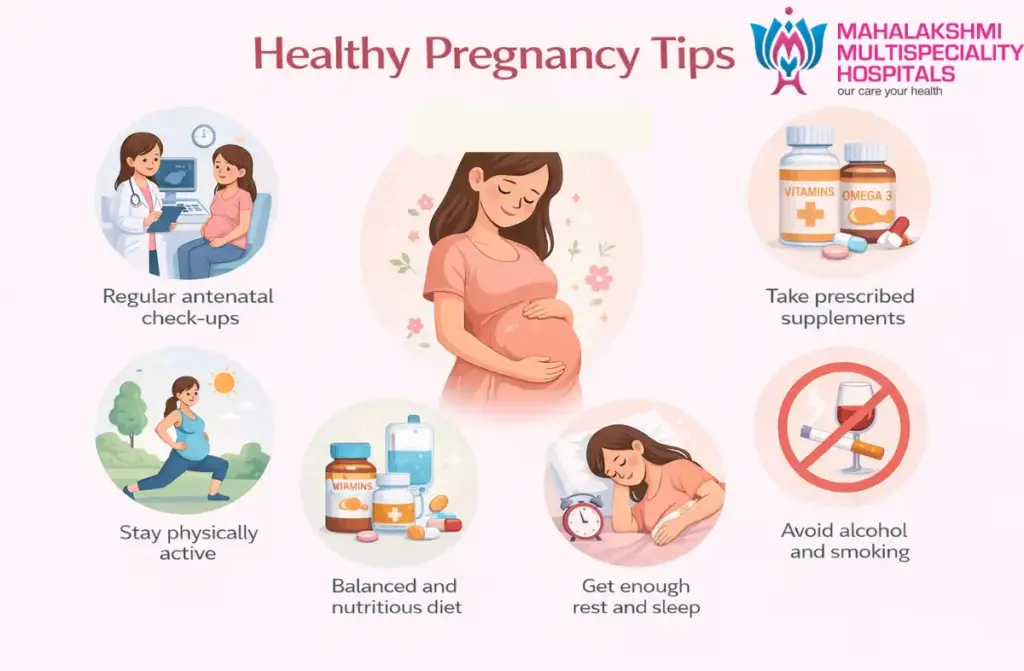
Daily Healthy Pregnancy Habits
- Take prenatal vitamins at the same time each day
- Eat three balanced meals plus healthy snacks
- Drink 8 to 10 glasses of water
- Walk for 20 to 30 minutes
- Sleep 7 to 9 hours, preferably on the left side
Weekly Pregnancy Care Routine
- Track foetal movements daily from week 28
- Note any new symptoms to discuss at the next visit
- Plan meals ahead for the week to avoid last-minute unhealthy choices
- Rest fully at least one afternoon a week
About the Author
- Qualification: MBBS, DGO, LLB, MBA (Hospital Administration)
- Speciality: Obstetrics, Gynecology, Infertility, Laparoscopic Surgery, Cosmetic Gynecology
- Experience: 20+ Years
- Location: Mahalakshmi Multispeciality Hospital, Kallakurichi
Dr. J. Ezhilarasi is the Managing Director and Senior Consultant Gynecologist at Mahalakshmi Multispeciality Hospital, Kallakurichi. She completed her MBBS from Tanjore Medical College and her DGO from Madurai Medical College and Madras Medical College (IOG), with advanced certifications in Fetal USG, Laparoscopy, and IVF.
Conclusion
A safe, comfortable pregnancy is built from ordinary daily choices rather than anything complicated. Whether you are in your first trimester in Ulundurpettai or approaching your due date in Kallakurichi, keeping up with balanced meals, gentle activity, enough rest, and every scheduled scan gives both you and your baby the best possible start. At Mahalakshmi Multispeciality Hospitals, I work with each mother to turn these healthy pregnancy tips into a routine that fits her own life, rather than a one-size-fits-all checklist — because that is what actually makes them easy to follow all the way to delivery day.
— Dr. J. Ezhilarasi, Obstetrician & Gynaecologist, Mahalakshmi Multispeciality Hospitals