Breast cancer treatment has entered an era where the question is no longer simply how to treat cancer, but how to deliver the right treatment to the right patient at the right time.
A Life Saved by Time, Science, and Personalized Care
Few areas of medicine have evolved as dramatically as breast cancer treatment. Just a few decades ago, treatment options were limited, and many patients received similar therapies regardless of the biological differences within their tumors. Today, breast cancer care has become one of the most advanced examples of personalized medicine.
Every year, millions of women and thousands of men worldwide undergo treatment for breast cancer. While a diagnosis can feel overwhelming, modern medicine now offers more treatment options, more precision, and better outcomes than ever before. Advances in early detection, surgical techniques, radiation therapy, targeted drugs, immunotherapy, and genomic testing have transformed breast cancer from a disease once associated with significant mortality into one where many patients achieve long-term survival and excellent quality of life.
Treatment decisions are no longer based solely on the presence of a tumor. Physicians now analyze the cancer’s stage, genetic profile, hormone sensitivity, growth patterns, and molecular characteristics before developing a personalized treatment strategy. This individualized approach helps maximize treatment effectiveness while reducing unnecessary side effects.
Perhaps the most encouraging development is that breast cancer survival rates continue to improve worldwide. Earlier diagnosis, precision medicine, multidisciplinary care, and ongoing research are allowing patients to live longer, healthier lives after treatment.
Although the journey can be physically and emotionally demanding, today’s breast cancer treatment landscape offers unprecedented hope. Patients now have access to therapies that are more targeted, less invasive, and increasingly capable of preserving both survival and quality of life.
Quick Summary
Breast cancer treatment is highly personalized and depends on cancer stage, tumor biology, genetic factors, and patient health.
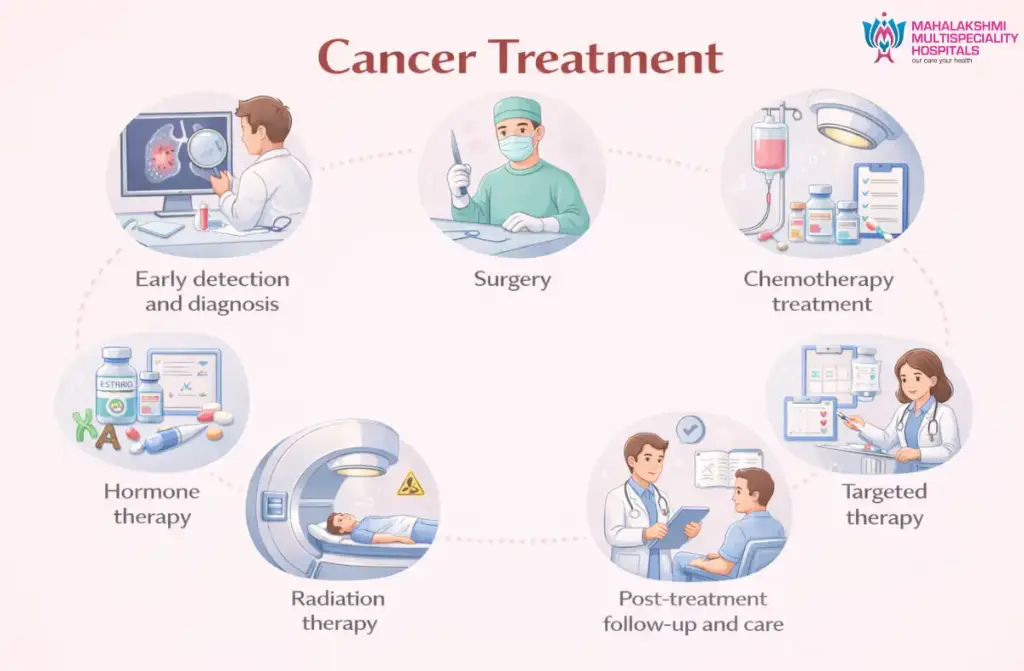
Common treatments include surgery, radiation therapy, chemotherapy, hormone therapy, targeted therapy, and immunotherapy.
Early-stage breast cancer is often highly treatable with curative intent.
Modern genomic testing helps determine which patients will benefit from specific therapies.
HER2-targeted treatments and hormone therapies have significantly improved survival rates.
Immunotherapy is creating new opportunities for selected patients, particularly those with triple-negative breast cancer.
Advances in reconstruction techniques help many patients restore physical appearance and confidence after surgery.
Survivorship care, mental health support, nutrition, and rehabilitation are essential parts of recovery.
Emerging innovations such as liquid biopsies, artificial intelligence, antibody-drug conjugates, and personalized cancer vaccines are shaping the future of breast cancer care.
Early detection and timely treatment remain among the most important factors influencing outcomes.
Understanding Breast Cancer Before Treatment Begins
Breast cancer develops when abnormal cells within breast tissue grow uncontrollably and form a tumor. These cancerous cells may remain confined to their original location or spread into surrounding tissues and distant organs.
Non-invasive breast cancers, such as ductal carcinoma in situ (DCIS), remain contained within milk ducts and have not spread into nearby tissues. Invasive breast cancers have penetrated surrounding breast tissue and may spread to lymph nodes or other organs.
Cancer stage plays a major role in treatment planning. Early-stage cancers are generally localized, while advanced stages involve greater local spread or distant metastasis. However, tumor size alone does not determine treatment. Tumor biology often provides equally important information.
Breast cancers are classified based on hormone receptor status and HER2 expression. Hormone receptor-positive cancers grow in response to estrogen or progesterone. HER2-positive cancers produce excessive HER2 protein that promotes aggressive growth. Triple-negative breast cancer lacks these markers and often requires different treatment strategies.
Genetic mutations such as BRCA1 and BRCA2 can increase breast cancer risk and influence treatment choices. Because every tumor behaves differently, no two breast cancer treatment plans are exactly alike.
The Diagnostic Process That Shapes Treatment Decisions
Effective treatment begins with a thorough diagnostic evaluation.
Physical examination helps identify breast abnormalities, skin changes, nipple alterations, and enlarged lymph nodes.
Mammography remains one of the most important imaging tools for detecting suspicious breast lesions. Ultrasound helps differentiate solid masses from fluid-filled cysts, while MRI provides detailed imaging in complex situations.
A biopsy is essential for confirming diagnosis. During this procedure, tissue samples are collected and examined by pathologists to determine cancer type, grade, and biological characteristics.
Pathology reports reveal critical information including tumor size, growth patterns, cellular appearance, and invasion status. Hormone receptor testing determines whether estrogen or progesterone influences tumor growth. HER2 testing identifies patients who may benefit from targeted therapies.
Genomic testing can evaluate recurrence risk and help determine whether chemotherapy will provide meaningful benefit. In some cases, CT scans, PET scans, or bone scans are performed when cancer spread is suspected.
Together, these findings create a comprehensive treatment roadmap.
The Multidisciplinary Team Behind Breast Cancer Treatment
Successful breast cancer treatment often involves collaboration among multiple healthcare professionals.
Medical oncologists oversee systemic therapies such as chemotherapy, targeted therapy, hormone therapy, and immunotherapy.
Surgical oncologists and breast surgeons perform procedures to remove tumors and affected tissues.
Radiation oncologists design radiation treatment plans to eliminate remaining cancer cells.
Plastic and reconstructive surgeons assist with breast reconstruction following surgery.
Oncology nurses provide education, symptom management, and ongoing support throughout treatment.
Pathologists analyze tissue samples, while radiologists interpret imaging studies.
Genetic counselors help patients understand hereditary cancer risks. Psychologists, social workers, nutritionists, and rehabilitation specialists address emotional, nutritional, and physical recovery needs.
This team-based approach improves treatment coordination and patient outcomes.
How Treatment Plans Are Personalized
Treatment recommendations are based on numerous factors.
Doctors consider cancer stage, tumor grade, tumor size, lymph node involvement, hormone receptor status, HER2 status, genetic mutations, and overall health.
Patient age and menopausal status influence treatment selection, particularly when hormone therapies are being considered.
Fertility preservation becomes especially important for younger patients planning future pregnancies.
Equally important are personal preferences regarding body image, quality of life, treatment intensity, and long-term goals. Personalized care ensures that treatment aligns with both medical needs and patient priorities.
Surgery: Often the First Major Step
Surgery remains one of the most effective methods for removing localized breast cancer.
The primary goal is to eliminate cancer while preserving as much healthy tissue as possible. Surgical options vary depending on tumor characteristics and patient preferences.
Breast-Conserving Surgery (Lumpectomy)
Lumpectomy removes the tumor along with a small margin of surrounding healthy tissue while preserving most of the breast.
Patients with smaller tumors and favorable disease characteristics often qualify for this approach.
Benefits include breast preservation and shorter recovery times. Limitations may include the need for additional surgery if cancer cells remain near surgical margins.
Radiation therapy typically follows lumpectomy to reduce recurrence risk.
Mastectomy
Mastectomy involves removal of breast tissue and may be recommended for larger tumors, multiple tumors, genetic risk factors, or patient preference.
Partial mastectomy removes a larger portion of breast tissue than lumpectomy.
Total mastectomy removes the entire breast.
Skin-sparing mastectomy preserves most breast skin for reconstruction.
Nipple-sparing mastectomy preserves both breast skin and nipple structures in selected patients.
Recovery varies depending on procedure complexity and reconstruction plans.
Lymph Node Surgery
Cancer frequently spreads first through lymphatic pathways.
Sentinel lymph node biopsy identifies and removes the first lymph nodes likely to contain cancer cells.
Axillary lymph node dissection removes additional lymph nodes when cancer involvement is more extensive.
Lymph node evaluation helps determine cancer stage and guides further treatment decisions. One potential complication is lymphedema, a chronic swelling condition affecting the arm.
Breast Reconstruction Options
Many patients choose reconstruction following mastectomy.
Immediate reconstruction occurs during cancer surgery, while delayed reconstruction takes place later.
Implant-based reconstruction uses silicone or saline implants.
Autologous reconstruction uses tissue transferred from other parts of the body.
Reconstruction can improve body image and emotional well-being, although recovery may require multiple procedures and extended healing time.
Radiation Therapy: Destroying Hidden Cancer Cells
Radiation therapy uses high-energy beams to destroy cancer cells that may remain after surgery.
External beam radiation therapy is the most commonly used approach. Partial breast irradiation targets only specific areas at risk.
Modern technologies allow highly precise treatment delivery while minimizing exposure to healthy tissues.
Treatment schedules may range from several days to several weeks depending on individual circumstances.
Common side effects include fatigue, skin irritation, breast swelling, and temporary discomfort. Long-term complications are uncommon but may include tissue changes and mild cosmetic alterations.
Chemotherapy: Fighting Cancer Throughout the Body
While chemotherapy remains one of the most recognized cancer treatments, its role has become far more selective than in previous decades. Modern genomic tests can identify patients who are unlikely to benefit from chemotherapy, allowing many individuals to safely avoid treatment and its associated side effects. This represents one of the most significant advances in personalized breast cancer care.
Neoadjuvant chemotherapy is administered before surgery to shrink tumors and improve surgical options.
Adjuvant chemotherapy is given after surgery to reduce recurrence risk.
Common medications include anthracyclines, taxanes, cyclophosphamide, and platinum-based drugs.
Treatment occurs in cycles, allowing the body time to recover between sessions.
Potential side effects include hair loss, nausea, fatigue, lowered immunity, and increased infection risk. Modern anti-nausea medications, growth factors, and supportive therapies have made chemotherapy significantly more manageable than in previous decades.
Hormone Therapy for Hormone-Receptor Positive Breast Cancer
Hormone receptor-positive cancers rely on estrogen or progesterone for growth.
Hormone therapy works by blocking these hormones or reducing their production.
Tamoxifen blocks estrogen receptors and is often prescribed for premenopausal women.
Aromatase inhibitors reduce estrogen production and are commonly used after menopause.
Ovarian suppression therapies temporarily or permanently reduce ovarian hormone production.
Treatment typically continues for five to ten years depending on recurrence risk.
Hormone therapy significantly reduces recurrence and improves long-term survival, although side effects may include hot flashes, joint pain, mood changes, and bone density concerns.
Targeted Therapy: Precision Medicine in Action
Targeted therapies attack specific molecular abnormalities driving cancer growth.
Unlike chemotherapy, these treatments focus on cancer-specific pathways while sparing many healthy cells.
HER2-targeted therapies have revolutionized outcomes for HER2-positive breast cancer. These medications can dramatically reduce recurrence and improve survival.
Targeted drugs are often combined with chemotherapy or hormone therapy for enhanced effectiveness.
Regular monitoring ensures treatment effectiveness while managing side effects such as heart-related complications or infusion reactions.
One of the most exciting developments in breast cancer treatment is the emergence of antibody-drug conjugates (ADCs). These therapies act like guided missiles, delivering powerful cancer-fighting drugs directly to tumor cells while minimizing damage to healthy tissues. ADCs are producing encouraging results in both advanced and previously treated breast cancers.
Immunotherapy and the New Era of Cancer Treatment
Immunotherapy harnesses the body’s immune system to recognize and attack cancer cells.
Some patients with triple-negative breast cancer benefit significantly from immunotherapy, particularly when combined with chemotherapy.
Researchers are actively studying combinations of immunotherapy with chemotherapy, targeted therapies, and personalized cancer vaccines. These strategies aim to improve immune recognition of cancer cells and create longer-lasting responses. Clinical trials continue to expand the potential role of immunotherapy across multiple breast cancer subtypes.
Treatment for Early-Stage Breast Cancer
The primary goal of early-stage breast cancer treatment is cure.
Most patients undergo surgery followed by radiation, hormone therapy, chemotherapy, targeted therapy, or a combination depending on tumor characteristics.
These treatments aim to eliminate cancer completely and reduce recurrence risk.
With modern therapies, long-term survival rates for many early-stage breast cancers are highly favorable.
Treatment for Locally Advanced Breast Cancer
Locally advanced breast cancer involves larger tumors or significant lymph node involvement.
Treatment often begins with systemic therapy such as chemotherapy or targeted therapy to shrink tumors before surgery.
Combining multiple treatment modalities improves surgical outcomes and increases the likelihood of long-term disease control.
Treatment for Metastatic Breast Cancer
Metastatic breast cancer occurs when cancer spreads beyond the breast and nearby lymph nodes.
Common sites include bones, liver, lungs, and brain.
Although metastatic breast cancer is generally not considered curable, treatment can often control disease for extended periods.
Modern therapies focus on prolonging survival, maintaining independence, minimizing symptoms, and preserving quality of life.
Many patients now live significantly longer due to advances in targeted therapies and precision medicine.
Life After Active Treatment Ends
Many survivors describe the completion of treatment as both a relief and a challenge. Follow-up care often includes regular physical examinations, mammograms, laboratory testing when appropriate, and surveillance imaging based on individual risk factors.
Some patients continue managing long-term effects such as fatigue, lymphedema, hormonal symptoms, bone health concerns, or emotional distress. Survivorship care plans help patients understand their ongoing health needs and provide clear guidance regarding monitoring, lifestyle recommendations, and future screening.
Learning to manage fear of recurrence is another important aspect of survivorship. Support groups, counseling services, exercise programs, and survivorship clinics can help individuals regain confidence and successfully transition back to daily life.
Breakthroughs Transforming Breast Cancer Treatment
Replace the existing section with a larger one:
The pace of innovation in breast cancer treatment continues to accelerate.
Precision oncology allows doctors to match therapies to specific genetic abnormalities within tumors. Advanced genomic profiling can reveal treatment opportunities that were previously impossible to identify.
Liquid biopsies are emerging as a promising tool that may detect microscopic cancer activity through simple blood tests. In the future, these tests may help identify recurrence earlier than traditional imaging methods.
Artificial intelligence is improving mammogram interpretation, treatment planning, risk prediction, and diagnostic accuracy. AI-assisted systems may help physicians identify subtle abnormalities that could otherwise be missed.
Antibody-drug conjugates are revolutionizing treatment for several forms of advanced breast cancer by combining targeted therapy with highly potent anti-cancer medications.
Personalized cancer vaccines are being investigated as a way to train the immune system to recognize unique tumor markers and attack cancer cells more effectively.
Researchers are also studying circulating tumor DNA, next-generation immunotherapies, and novel targeted drugs that could further improve outcomes while reducing side effects.
Ongoing clinical trials continue to shape the future of breast cancer care, offering hope that treatments will become increasingly precise, effective, and personalized.
Breast Cancer Treatment Across Different Age Groups
Children and Adolescents
Breast cancer in children and adolescents is extremely rare. Management typically involves specialized cancer centers with expertise in pediatric oncology.
Young Adults
Younger patients face unique concerns involving fertility preservation, future pregnancies, career development, and family planning. Genetic counseling is often recommended.
Middle-Aged Adults
Treatment frequently requires balancing cancer care with work responsibilities, caregiving duties, and long-term survivorship planning.
Older Adults
Treatment decisions must consider overall health, functional status, and other medical conditions. Therapy intensity is individualized to maximize benefit while minimizing harm.
Managing Physical Side Effects During Treatment
Patients may experience fatigue, pain, nausea, vomiting, hair loss, neuropathy, skin changes, lymphedema, bone loss, and cognitive difficulties often called “chemo brain.”
Early recognition and proactive management improve comfort and treatment adherence.
Medications, physical therapy, nutrition support, exercise programs, and symptom-monitoring strategies can significantly reduce treatment burden.
The Emotional and Psychological Impact of Treatment
A breast cancer diagnosis often triggers fear, uncertainty, anxiety, and emotional distress.
Body image concerns may arise after surgery or hair loss. Relationship challenges, depression, and emotional exhaustion can affect both patients and caregivers.
Mental health support is a vital component of comprehensive cancer care.
Counseling, support groups, mindfulness practices, and social support networks help many patients develop resilience throughout treatment and recovery.
Nutrition During Breast Cancer Treatment
Proper nutrition supports healing, energy levels, immune function, and treatment tolerance.
Adequate protein intake helps repair tissues and maintain muscle mass.
Hydration is essential, particularly during chemotherapy.
Patients may experience appetite loss, taste changes, nausea, or digestive difficulties. Nutrition specialists can recommend individualized strategies to maintain nutritional status.
Evidence-based dietary guidance is important because many popular cancer nutrition myths lack scientific support.
Exercise and Physical Rehabilitation
Physical activity offers substantial benefits during and after treatment.
Exercise helps reduce fatigue, maintain strength, improve mood, and support cardiovascular health.
After surgery, rehabilitation exercises restore shoulder mobility and arm function.
Long-term physical activity contributes to better overall health and may reduce recurrence risk in some patients.
Programs should be tailored to individual fitness levels and treatment status.
Fertility, Pregnancy, and Breast Cancer Treatment
Some breast cancer treatments can affect fertility.
Before treatment begins, patients interested in future parenthood should discuss options such as egg freezing, embryo preservation, or fertility-protective strategies.
Many women can safely pursue pregnancy after completing treatment, although timing should be carefully discussed with oncology specialists.
Early family planning discussions help preserve future reproductive choices.
Financial Considerations of Breast Cancer Treatment
Breast cancer treatment may involve significant financial challenges.
Costs can include diagnostic testing, surgery, hospitalization, medications, imaging studies, rehabilitation, and long-term follow-up care.
Insurance limitations, lost work income, travel expenses, and supportive care needs can place additional strain on families.
Financial counseling and assistance programs may help reduce economic burdens.
Life After Active Treatment Ends
Completing treatment marks the beginning of survivorship.
Patients transition from intensive therapy to ongoing monitoring and preventive care.
Regular follow-up visits, mammograms, and imaging studies help detect recurrence or new cancers.
Many survivors experience fear of recurrence, requiring continued emotional support.
Gradually returning to normal routines while prioritizing long-term health maintenance becomes an important part of recovery.
Signs That Require Immediate Medical Attention During Treatment
Certain symptoms require urgent medical evaluation.
These include fever, signs of infection, severe breathing difficulties, uncontrolled pain, sudden swelling, neurological symptoms such as weakness or confusion, and serious treatment reactions.
Prompt communication with healthcare providers can prevent complications and improve outcomes.
Breakthroughs Transforming Breast Cancer Treatment
Scientific innovation continues to reshape breast cancer care.
Precision oncology allows therapies to be matched to specific tumor mutations.
Liquid biopsies may enable earlier detection of recurrence through blood testing.
Artificial intelligence is helping physicians analyze imaging and treatment data more efficiently.
Personalized cancer vaccines, advanced genomic profiling, and next-generation targeted therapies are expanding treatment possibilities.
Clinical trials continue driving progress and creating new opportunities for patients worldwide.
Common Myths About Breast Cancer Treatment
Many misconceptions persist despite medical advances.
Breast cancer does not always require mastectomy. Many patients successfully undergo breast-conserving surgery.
Chemotherapy is not necessary for every patient.
Treatment is never identical for all individuals because cancer biology differs significantly.
Breast cancer can affect younger adults and, although less commonly, men.
Most importantly, a diagnosis no longer automatically implies poor survival. Modern treatments have transformed outcomes for millions of patients.
Questions Patients Should Ask Their Treatment Team
Patients benefit from active participation in treatment decisions.
Important questions include:
* What stage is my cancer?
* What treatment options are available?
* What are the expected benefits and risks?
* Will treatment affect fertility?
* What side effects should I expect?
* Are clinical trials appropriate for me?
* How will treatment affect daily life?
* What follow-up care will be required?
Open communication helps patients make informed decisions and feel more confident throughout treatment.
The Future of Breast Cancer Treatment
The future of breast cancer care is moving toward increasingly personalized medicine.
Earlier detection methods may allow less aggressive treatments while maintaining excellent outcomes.
New targeted therapies, immunotherapies, genomic technologies, and precision diagnostics are expected to further improve survival rates and reduce treatment-related side effects.
Researchers continue working toward treatments that are not only more effective but also more individualized, offering patients longer, healthier lives.
Conclusion
Breast cancer treatment is no longer a single standardized pathway but a highly individualized journey guided by science, technology, and patient-centered care. Modern medicine combines surgery, radiation therapy, chemotherapy, hormone therapy, targeted therapy, and immunotherapy to maximize effectiveness while preserving quality of life. Early diagnosis, accurate tumor profiling, and multidisciplinary collaboration have transformed survival outcomes worldwide. As research continues to advance, breast cancer treatment is becoming increasingly precise, less invasive, and more effective, offering renewed hope and creating more survivors than ever before.