

Tinnitus, commonly experienced as ringing, buzzing, or humming in the ears, can be challenging to live with. It often affects concentration, sleep, and emotional well-being. While medical care is essential, many people are now exploring natural methods to manage symptoms. Yoga for Tinnitus offers a calming and holistic approach that supports both the mind and body. By combining gentle movements, breathing techniques, and mindfulness, yoga helps reduce stress and improves the way the brain responds to internal sounds. With regular practice, it becomes easier to manage tinnitus and improve overall quality of life.
Understanding Tinnitus and Its Challenges
- Tinnitus is not a disease but a symptom that can arise from various causes, including hearing loss, ear infections, prolonged noise exposure, or stress. For some individuals, the sound is constant, while for others it comes and goes. Regardless of the pattern, tinnitus can lead to frustration, anxiety, and even depression if not managed properly.
- One of the key factors influencing tinnitus is the brain’s response to sound. When the mind becomes overly focused on the ringing, it can amplify the perception, making it more disturbing. This is why stress and anxiety often worsen the condition.
- Yoga for Tinnitus works by shifting this response. It trains the body to relax and the mind to stay calm, reducing the intensity and awareness of the sound over time.
How Yoga for Tinnitus Works
- Yoga is more than physical exercise; it is a mind-body practice that promotes balance and relaxation. It helps manage tinnitus through several mechanisms.
- First, yoga reduces stress levels. High stress increases the perception of tinnitus, while relaxation lowers it. Deep breathing activates the parasympathetic nervous system, helping the body to relax and calm down.
- Second, yoga improves blood circulation. Better blood flow to the head and neck supports ear health and reduces pressure that may contribute to tinnitus.
- Third, yoga releases muscle tension. Tight muscles in the neck and shoulders can affect nerve signals related to hearing. Stretching these areas helps relieve discomfort.
- Finally, meditation helps change how the brain processes sound. Instead of reacting negatively to tinnitus, the mind learns to observe it without stress.
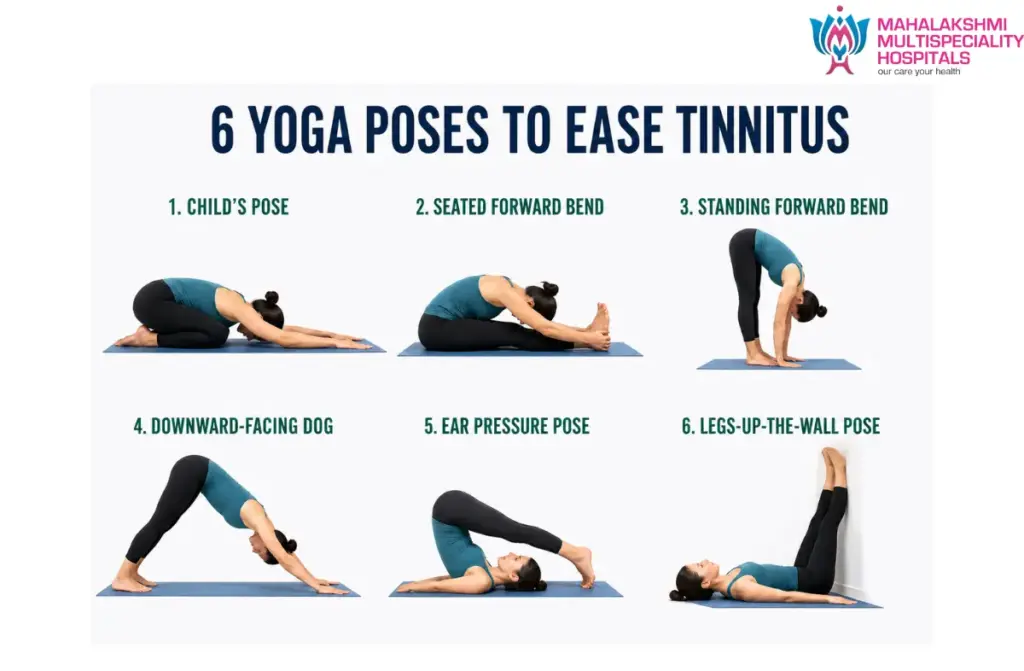
6 Yoga Poses to Ease Tinnitus
Yoga is widely used as a supportive practice for tinnitus management because it works on both the body and mind. Tinnitus often becomes more noticeable during stress, fatigue, anxiety, or poor sleep. Yoga helps reduce these triggers by calming the nervous system, improving blood circulation, and releasing muscular tension in the neck, shoulders, and head region. When practiced regularly, these effects can make tinnitus less intrusive and easier to cope with in daily life. Below are six yoga poses explained in detail with their benefits, step-by-step practice, and how they support tinnitus relief.
1. Child’s Pose (Balasana)
- Child’s Pose is one of the most effective relaxation postures in yoga. It is often used to calm the mind, slow down breathing, and release accumulated tension in the upper body. Since stress is one of the biggest factors that worsens tinnitus, this pose plays an important role in symptom management.
- To practice, sit on your heels and gently bend forward from your hips. Extend your arms in front or keep them beside your body if that feels more comfortable. Rest your forehead on the mat or on a cushion for support. Allow your entire body to soften.
- While holding the pose, focus on slow and deep breathing. With every exhale, imagine releasing tension from your head, jaw, neck, and shoulders. This posture helps activate the parasympathetic nervous system, which promotes relaxation and reduces overactivity in the brain that may heighten tinnitus perception.
- Regular practice can improve emotional stability, reduce anxiety, and help the mind become less reactive to internal ringing sounds.
2. Seated Forward Bend (Paschimottanasana)
- Seated Forward Bend is a calming stretch that targets the entire back of the body, including the spine, hamstrings, and neck. Tight muscles in these areas can contribute to poor posture and increased tension, which may indirectly worsen tinnitus symptoms.
- To perform this pose, sit on the floor with your legs extended straight in front of you. Keep your spine tall initially. Then slowly hinge forward from your hips rather than rounding your back. Reach forward toward your feet, ankles, or shins based on your flexibility level.
- Avoid forcing the stretch. The goal is relaxation, not intensity. With each breath, try to soften your upper body and let gravity assist the movement.
- This posture encourages mental stillness, reduces nervous system stress, and improves flexibility in the spine. Over time, it helps the body feel lighter and more relaxed, reducing the physical tension that can amplify tinnitus discomfort.
3. Standing Forward Bend (Uttanasana)
- Standing Forward Bend is a simple yet powerful pose that improves blood flow to the head and helps release tension in the neck, shoulders, and upper back. It is particularly helpful when tinnitus is linked to stress or mental fatigue.
- Stand with your feet hip-width apart and keep your knees slightly soft. Slowly bend forward from your hips and let your upper body hang naturally. You can hold your elbows or let your arms rest toward the floor.
- Allow your head to relax completely. This inversion increases circulation toward the brain and ears, which may help balance sensory perception.
- While holding the pose, focus on deep breathing. With every exhale, let go of tension in the jaw, neck, and shoulders. This pose helps reduce mental overload, creating a calming effect that can make tinnitus feel less intense.
4. Downward-Facing Dog (Adho Mukha Svanasana)
- Downward-Facing Dog is a full-body pose that stretches and strengthens while improving circulation. It is especially beneficial for relieving stiffness in the upper body, which is often associated with tinnitus discomfort.
- Start on your hands and knees. Open your fingers wide and push strongly into the floor. Slowly lift your hips upward, forming an inverted “V” shape with your body. Keep your spine long and avoid collapsing your shoulders.
- Your heels do not need to touch the ground; focus instead on lengthening the spine. Keep your neck relaxed and gaze toward your legs or the floor.
- This pose improves oxygen flow to the brain, releases tension in the jaw and shoulders, and promotes overall body awareness. By reducing physical tightness and improving circulation, it helps create a calmer internal environment, which can reduce tinnitus sensitivity.
5. Ear Pressure Pose
- Ear Pressure Pose is a gentle inversion that may help influence blood circulation and pressure balance in the head and ear region. Beginners should practice it slowly and with care.
- Lie down on your back with your arms gently at your sides. Slowly lift your legs upward and continue moving them over your head until they reach a comfortable position behind you. Support your lower back with your hands if needed for stability.
- This position gently compresses the upper body, encouraging blood flow toward the head while calming the nervous system. The inversion effect helps relax mental activity and may reduce the intensity of tinnitus perception.
- It is important to avoid strain in the neck or shoulders. The pose should feel supported and controlled at all times.
6. Legs-Up-the-Wall Pose (Viparita Karani)
- Legs-Up-the-Wall Pose offers gentle relaxation and helps the body recover. It is highly effective for calming the nervous system, reducing fatigue, and supporting better sleep—all essential for managing tinnitus.
- Sit close to a wall and gently lie down while lifting your legs upward against the wall. Adjust your position so your lower back feels comfortable and supported.
- Close your eyes and notice each relaxed, natural breath. Place your arms gently at your sides. Stay in this position for several minutes, allowing your body to fully relax.
- This pose reduces stress hormones, improves circulation, and helps the mind enter a deeply restful state. Over time, it can reduce emotional reactivity to tinnitus and improve overall quality of life.
Benefits of Yoga for Tinnitus
- Yoga provides several benefits that directly impact tinnitus symptoms. It reduces stress and anxiety, which are common triggers. By calming the nervous system, yoga lowers the intensity of ringing sensations.
- It also improves focus and concentration, helping individuals shift attention away from internal sounds. Better sleep is another key benefit, as rest plays a crucial role in managing tinnitus.
- Additionally, yoga enhances emotional balance, making it easier to cope with the condition. Over time, these benefits contribute to improved quality of life.
Scientific Support for Yoga and Tinnitus
- Research has shown that yoga and relaxation techniques can improve the daily experience of people with tinnitus. Regular practice has been linked to reduced stress, better sleep, and improved control over symptoms.
- Mindfulness-based practices help the brain process sound differently, reducing its emotional impact. Studies also suggest that yoga can improve neural connections related to sensory perception, which may help regulate tinnitus awareness.
Creating a Daily Yoga Routine
Consistency is key when practicing Yoga for Tinnitus. A simple daily routine can include:
- 10 minutes of breathing exercises
- 10–15 minutes of gentle yoga poses
- 5–10 minutes of meditation
- 5 minutes of relaxation
Practicing in a quiet and comfortable environment enhances the benefits. Morning sessions can improve energy and focus, while evening sessions help promote relaxation and better sleep.
Lifestyle Tips to Support Yoga Practice
- A healthy lifestyle helps maximize the benefits of yoga. Maintaining good posture, staying hydrated, and getting enough sleep are essential.
- Reducing exposure to loud noises and limiting caffeine intake can also help manage tinnitus. Listening to calming sounds or practicing mindfulness during daily activities can further support symptom relief.
Common Mistakes to Avoid
- While practicing Yoga for Tinnitus, it is important to avoid certain mistakes. Skipping regular practice can limit results. Overexertion or forcing poses may cause discomfort instead of relief.
- Ignoring proper breathing techniques can reduce effectiveness. It is also important not to expect immediate results, as yoga works gradually over time.
Who Should Practice Yoga for Tinnitus?
- Yoga is suitable for most individuals experiencing tinnitus, especially those whose symptoms are linked to stress or tension. New learners can start with basic poses and progress gradually.
- However, individuals with medical conditions or injuries should consult a healthcare professional before starting a new practice.
Long-Term Benefits of Yoga for Tinnitus
- With consistent practice, yoga offers long-term improvements. It reduces stress and anxiety, improves sleep quality, and enhances emotional well-being.
- It also helps individuals develop better coping strategies, making tinnitus less intrusive. Over time, many people experience a significant reduction in symptom intensity.
Conclusion
Yoga for Tinnitus is a natural and effective way to manage symptoms by calming the mind, reducing stress, and improving physical balance. While it may not eliminate tinnitus completely, it significantly reduces its impact on daily life. With regular practice and a supportive lifestyle, individuals can experience better control, improved relaxation, and enhanced overall well-being.