

Kegel exercises for pregnancy are simple, targeted contractions of the pelvic floor muscles the group of muscles that form a hammock like base at the bottom of your pelvis. Named after Dr. Arnold Kegel, who introduced them in the 1940s, these exercises involve repeatedly squeezing, holding, and releasing those internal muscles. Unlike most workouts, Kegels require no equipment, no special clothing, and can be done anywhere sitting on a chair, lying in bed, or even waiting in line.
Role of Pelvic Floor Muscles in Pregnancy
Your pelvic floor muscles carry a heavy responsibility even before pregnancy. They support the bladder, uterus, bowel, and vagina. During pregnancy, as your baby grows and your uterus expands, these muscles bear increasing downward pressure week after week. Hormonal changes particularly the release of relaxin also soften and loosen ligaments and connective tissue throughout your pelvis, which can naturally weaken pelvic floor strength over time.
Why these Muscles Matter
Strong pelvic floor muscles are the foundation of a comfortable pregnancy and a smoother postpartum recovery. They help control urination, maintain bowel function, support the growing weight of your baby, and play a direct role during the pushing phase of labor. When these muscles are weak or poorly conditioned, women are far more likely to experience leakage, pelvic pain, or prolonged recovery after delivery. That’s exactly why kegel exercises for women during pregnancy are recommended by OB-GYNs and midwives worldwide.
Why Kegel Exercises are Important During Pregnancy
- Support for Growing Baby: As your pregnancy progresses into the second and third trimesters, your baby’s weight increases significantly. The pelvic floor acts like a supportive shelf beneath the uterus, and without adequate muscle tone, that shelf begins to sag. Consistently practicing kegel exercises for pregnancy helps maintain the structural integrity of your pelvic region, reducing discomfort like pelvic pressure, lower back pain, and the heavy sensation many pregnant women describe in their later weeks.
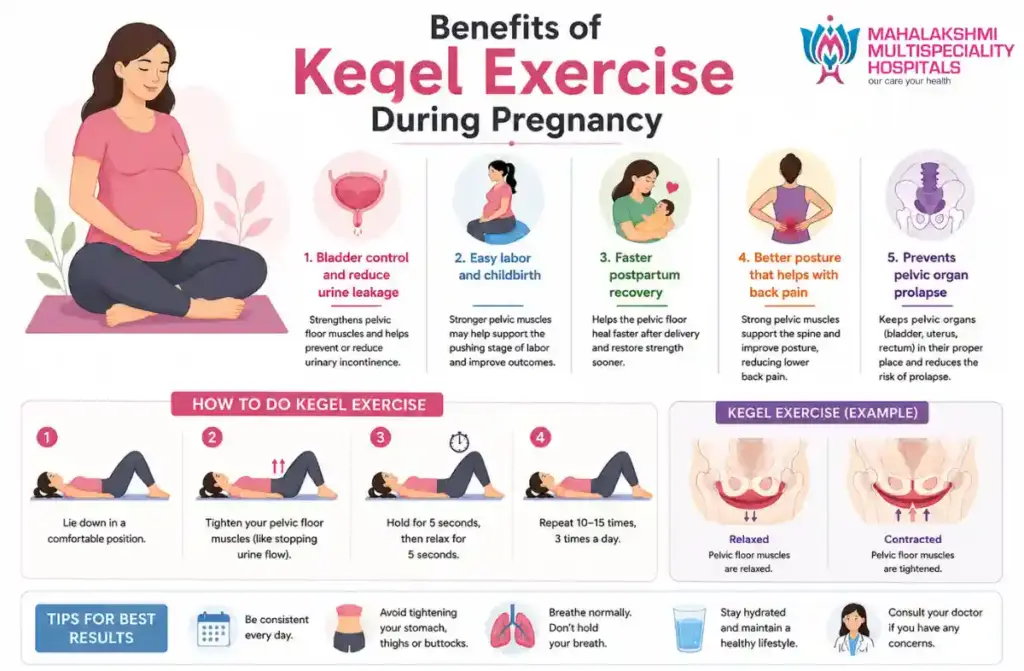
- Improved Bladder Control: One of the most common and frustrating symptoms of pregnancy is stress urinary incontinence: leaking urine when you cough, sneeze, laugh, or move suddenly. This happens because the growing uterus puts direct pressure on the bladder. Strengthened pelvic floor muscles act as a valve, giving you better control. Studies consistently show that women who perform regular Kegel exercises during pregnancy experience significantly less leakage than those who do not.
- Easier Labor and Delivery: Perhaps the most compelling reason to start kegel exercises for women during pregnancy is their positive impact on labor. A pelvic floor that is both strong and flexible able to contract firmly and relax completely can reduce the duration of the second stage of labor (the pushing phase). When you can consciously relax these muscles on command, your body works with contractions rather than against them, helping your baby move through the birth canal more efficiently.
- Faster Postpartum Recovery: Childbirth stretches and sometimes tears the pelvic floor muscles. Women who have been doing Kegels throughout pregnancy tend to recover faster, regain bladder control sooner, and report less perineal discomfort in the weeks following delivery. The muscle memory built during pregnancy makes postpartum Kegel rehabilitation easier and more effective.
Benefits of Kegel Exercises for Pregnant Women
- Prevents Urinary Incontinence: Urinary leakage affects up to 50% of pregnant women. The benefits of kegel exercises for pregnancy are clearly seen here consistent practice tightens the urethral sphincter and surrounding muscle support, dramatically reducing episodes of involuntary leakage. Many women who start early in their first trimester notice a significant improvement by the second trimester.
- Strengthens Pelvic Floor Muscles: Regular Kegel practice gradually builds muscle fiber density and endurance in the pelvic floor. Just like strengthening your biceps through repetition, the pelvic floor responds to consistent contraction and relaxation training. Stronger muscles mean better support for your pelvic organs throughout all three trimesters and beyond.
- Reduces Risk of Pelvic Organ Prolapse: Pelvic organ prolapse where the bladder, uterus, or rectum descends into or outside the vaginal canal is a serious condition that can develop after childbirth, especially in women with weakened pelvic floors. Performing best kegel exercises for pregnancy throughout the prenatal period is one of the most effective preventive strategies recommended by pelvic health physiotherapists.
- Improves Muscle Control During Delivery: Beyond strength, Kegels build conscious neuromuscular control the ability to relax and engage your pelvic floor on cue. During delivery, your healthcare provider may guide you to release these muscles during contractions. Women who have practiced Kegels regularly are better able to follow this guidance, which can reduce tearing, decrease the need for episiotomies, and shorten the pushing phase.
Who Should do Kegel Exercises in Pregnancy?
- First Time Mothers: First time mothers often have pelvic floor muscles that have never been significantly stressed. This makes them an ideal group to begin kegel exercises for pregnancy early ideally in the first trimester to build a strong foundation before the physical demands of pregnancy intensify.
- Women with Weak Pelvic Floor: Women who already notice symptoms of a weak pelvic floor such as difficulty holding urine when they feel a sudden urge, or discomfort during physical activity should begin Kegel training as soon as possible. A pelvic health physiotherapist can assess baseline strength and design an individualized program.
- Women Experiencing Urinary Leakage: If you are already experiencing stress incontinence during pregnancy, kegel exercises for women during pregnancy are a clinically supported, non pharmacological treatment. Many women see measurable improvement within four to six weeks of consistent practice.
- When to Avoid Kegels: Not everyone should do Kegel exercises without medical guidance. Women with hypertonic (overly tight) pelvic floor dysfunction which can cause pelvic pain, painful intercourse, or difficulty with bowel movements may worsen their symptoms with additional contracting. If you have been diagnosed with pelvic floor tension myalgia, vaginismus, or certain types of pelvic girdle pain, consult your OB-GYN or pelvic physiotherapist before starting.
How to Identify the Right Pelvic Floor Muscles
- Simple Methods to find the Muscles: The most commonly taught method is to imagine you are trying to stop the flow of urine midstream the muscles you engage are your pelvic floor muscles. Another useful technique is to imagine picking up a small object with your vagina, or gently tightening as if you are trying to hold back gas. You should feel an internal lifting and squeezing sensation, not an external clenching.
- Common Mistakes while Identifying: Many women mistakenly tighten their glutes, inner thighs, or abdominal muscles instead of isolating the pelvic floor. If your buttocks clench visibly or your stomach sucks in hard, you are likely engaging the wrong muscles. Another common error is bearing down (pushing outward) rather than lifting inward.
- Why Correct Technique Matters: Performing Kegels with the wrong muscles provides no benefit for pelvic floor strength and may even increase intra abdominal pressure in unhelpful ways. Taking a few minutes to correctly identify and isolate the target muscles before starting your routine ensures every repetition counts.
How to do Kegel Exercises During Pregnancy (Step by Step)
The best kegel exercises for pregnancy follow a simple, repeatable sequence. Start in a comfortable position lying down works well for beginners.
Step 1: Contract the Pelvic Muscles
Empty your bladder first. Get into a relaxed position. Breathe normally, then gently contract your pelvic floor muscles squeeze and lift inward, as if stopping the flow of urine. Focus on isolating only the pelvic floor; your abdomen, thighs, and buttocks should remain relaxed.
Step 2: Hold for a Few Seconds
Hold the contraction for 3 to 5 seconds when you are starting out. As your muscles strengthen over several weeks, gradually increase the hold to 8 to 10 seconds. Keep breathing normally throughout the hold do not hold your breath.
Step 3: Relax and Repeat
Fully release and relax the muscles for an equal amount of time if you held for 5 seconds, rest for 5 seconds. This relaxation phase is just as important as the contraction. Repeat the cycle 10 to 15 times per set.
Recommended Repetitions and Frequency
Aim for 3 sets of 10 to 15 repetitions daily. Most kegel exercises for pregnancy guidelines recommend spreading these sets throughout the day morning, afternoon, and evening rather than doing all sets at once, which can fatigue the muscles.
Best Time to do Kegel Exercises
- Daily Routine Integration: The most effective strategy is to attach Kegel practice to an existing daily habit while brushing your teeth, sitting at your desk, watching television, or riding in a car. Because Kegels are invisible to others, they can be done in any setting without anyone noticing.
- Before and After Delivery: The benefits of kegel exercises for pregnancy extend into the postpartum period. Many pelvic health experts recommend continuing Kegel exercises throughout pregnancy and resuming them within 24 hours of vaginal delivery (once comfortable), as early engagement supports faster healing of perineal tissues and quicker return of bladder control.
How Often Should you Practice?
Daily practice is the goal. Consistency over perfection: 10 minutes of daily Kegels across three sessions will produce significantly better results than an occasional long session. Set a reminder on your phone if needed to build the habit, especially in the first few weeks.
Common Mistakes to Avoid
- Over tightening Muscles: More is not always better. Contracting with maximum effort every time can fatigue the muscles and, in some cases, lead to increased pelvic tension. A moderate, controlled squeeze roughly 60 to 70% of your maximum effort is often more sustainable and effective for building endurance.
- Holding Breath: Breath holding increases intra abdominal pressure and actually works against what you are trying to achieve. Always breathe freely and rhythmically throughout each contraction and release.
- Using Wrong Muscles (Abs/Thighs): If you notice your stomach pulling in tightly or your legs pressing together, pause and reset. Place one hand on your lower abdomen to check it remains soft. Focus your awareness inward and upward rather than outward and downward.
- Doing Kegels Incorrectly: Pushing down rather than lifting up is a very common error among beginners. Bearing down repeatedly can actually weaken the pelvic floor over time. If you are uncertain about your technique, a single session with a certified pelvic floor physiotherapist can make a tremendous difference.
Are Kegel Exercises Safe during Pregnancy?
- Safety Guidelines: Yes kegel exercises for women during pregnancy are considered safe for most healthy pregnant women at any stage of pregnancy, including the first trimester. They do not put pressure on the baby, do not stimulate labor, and carry no risk of physical injury when performed correctly. They require no equipment and no physical exertion beyond the targeted muscle group.
- When to Consult a Doctor: Always inform your midwife or OB-GYN that you are starting a Kegel routine, particularly if you have a high risk pregnancy, placenta previa, a history of preterm labor, or any pelvic pain. While Kegels are generally safe, your care provider may have specific guidance based on your individual circumstances.
- Conditions where Kegels Should be Avoided: As noted earlier, women with hypertonic pelvic floor conditions, active pelvic infections, or certain pelvic girdle disorders should avoid Kegel exercises until cleared by a pelvic health specialist. Performing Kegels when the pelvic floor is already over contracted can increase pain and dysfunction.
When to Expect Results
- Timeline for Improvement: Most women practicing kegel exercises for pregnancy consistently will begin to notice improvements in 4 to 6 weeks. Significant strengthening of the pelvic floor typically takes 3 months of regular practice. Do not be discouraged if results feel slow pelvic floor muscles respond to training like any other muscle, and the progress is real even when it is gradual.
- Signs your Pelvic Floor is Getting Stronger: Positive indicators include fewer or no leakage episodes when sneezing or coughing, a stronger sensation during contractions, improved ability to hold contractions for longer durations, reduced pelvic pressure and heaviness in later pregnancy, and faster recovery of bladder control after delivery.
Additional Tips for Better Results
- Combine with Prenatal Exercises: The best kegel exercises for pregnancy work synergistically with other prenatal fitness activities. Prenatal yoga, swimming, and walking all support overall pelvic health. Deep breathing and diaphragmatic exercises complement Kegels by coordinating the diaphragm, deep abdominals, and pelvic floor a system that works together in healthy function.
- Maintain Proper Posture: Poor posture particularly prolonged sitting with a rounded lower back places your pelvis in a position that inhibits natural pelvic floor engagement. Sitting tall with your sit bones evenly weighted and your spine gently elongated allows the pelvic floor to function optimally. This supports both your Kegel practice and your overall pelvic health.
- Stay Consistent: Consistency is the single most important factor in the benefits of kegel exercises for pregnancy. Even on days when you feel tired, nauseous, or busy, a short set of 10 contractions is far better than skipping entirely. Many women find that committing to a specific time of day such as immediately after waking or before bed makes the habit far more sustainable.
Conclusion
Kegel exercises for pregnancy are one of the most accessible, evidence backed practices an expectant mother can adopt. From preventing urinary incontinence and supporting the growing baby to facilitating a smoother labor and faster postpartum recovery, the benefits are wide ranging and well documented. The benefits of kegel exercises for pregnancy are available to virtually every pregnant woman regardless of fitness level, age, or trimester. Whether you are a first time mother just learning about pelvic health or an experienced mother looking to prepare your body more intentionally, starting kegel exercises for women during pregnancy today is a small daily investment with significant lifelong returns. Learn the technique correctly, practice consistently, and do not hesitate to seek guidance from a pelvic health physiotherapist if you have any concerns. Your pelvic floor and your postpartum self will thank you.