
Winter can be a beautiful season, but it can also increase stress on your heart. Recent research from the Times of India shows that cold weather can raise the risk of heart attacks, often appearing two to six days after exposure. Cold air makes blood vessels tighten, which raises blood pressure and forces your heart to work harder. Knowing this can help you stay alert and take smart precautions. With awareness and care, you can protect yourself from a heart attack in Winter.
How Cold Weather Affects Your Heart
Cold weather causes blood vessels to constrict, which increases blood pressure and makes the heart work harder. Studies show that the risk of heart attacks rises in winter, partly due to this extra strain, especially in older adults and people with existing heart conditions.
Exposure to cold can also trigger faster heart rates and thicker blood, making clots more likely. According to research from the American Heart Association, sudden cold exposure can increase the chance of a heart attack in winter, highlighting the importance of taking simple precautions.
Do Heart Attacks Increase in Cold Weather?
Yes, heart attacks do increase during cold weather, and this pattern is seen around the world — including India. Cold air causes your blood vessels to tighten, which raises blood pressure and forces your heart to work harder. For people with high cholesterol, diabetes, or existing heart disease, this extra strain can trigger a heart attack even during normal daily activities.
Several hospitals in India have reported a noticeable rise in cardiac emergencies during winter. Doctors from centres in Hyderabad, Himachal Pradesh, Tamil Nadu and Delhi note that heart attack cases increase by 15–20% in colder months. The body naturally tries to stay warm by narrowing blood vessels and increasing heart rate, which puts more pressure on the heart.
Why Winter Increases Heart Attack Risk
- Blood vessels narrow in cold air, raising blood pressure.
- The heart works harder to maintain body temperature.
- Blood becomes slightly thicker, increasing the chance of clots.
- Sudden exertion in the cold, like rushing, climbing stairs, or outdoor chores, adds stress.
- Winter infections such as flu can worsen inflammation and strain the heart.
- Low sunlight exposure may drop vitamin D levels, which some studies link to poorer heart health.
What This Means for You
Cold weather does not directly cause heart problems, but it can trigger issues in people who already have risk factors. When temperatures drop, the body works harder to stay warm, which increases strain on the heart. Understanding how winter affects heart health can help you take small daily steps to stay warm, stay active safely, and protect your heart throughout the season.
How to Spot Heart Attack Signs in Winter
Recognizing the early warning signs of a heart attack becomes even more important during the colder months. Symptoms can sometimes feel milder or get mistaken for winter-related fatigue, cold, or muscle strain. But knowing what to look for can help you act quickly and protect your health—especially if you are at risk of heart attack in Winter.
Common Signs You Should Never Ignore
- Chest pain or tightness
A heavy, squeezing, or burning feeling in the chest that lasts more than a few minutes or comes and goes. - Pain spreading to the arm, shoulder, or jaw
This classic symptom may feel like pressure, numbness, or an achy discomfort. - Shortness of breath
Feeling breathless even when you are not doing anything strenuous, or struggling to catch your breath. - Sudden sweating
Cold, clammy sweat that appears without any physical activity. - Unusual fatigue
Feeling extremely tired or weak, especially if it starts suddenly or feels out of proportion to your activity. - Nausea or stomach pain
Some people—especially women—experience nausea, indigestion-like discomfort, or vomiting. - Lightheadedness or dizziness
Feeling faint, shaky, or unsteady without any clear reason. - Back pain or upper body discomfort
Pain between the shoulder blades or in the upper back can sometimes signal heart trouble.
Why Winter Makes These Symptoms Riskier
Winter puts extra strain on the heart. Cold air tightens blood vessels and raises blood pressure, making the heart work harder. For people who already have heart attack in Winter, even mild symptoms should not be ignored.
When to Seek Help
If you or someone near you develops these symptoms—especially chest pain combined with breathlessness or sweating—seek emergency medical care immediately. Quick action can save a life.
Who Is More at Risk in Cold Weather?
Certain groups feel the impact of low temperatures more strongly, especially when heart disease in winter becomes harder to manage. Cold air puts pressure on the heart, and some people are more sensitive to these changes.
People at higher risk include:
- Older adults, as their bodies adjust slowly to sudden drops in temperature.
- Individuals with existing heart conditions, especially those with a history of chest pain, high BP, or previous heart attacks.
- People with diabetes, because nerve damage can delay warning signs.
- Smokers, whose blood vessels are already narrowed, making circulation more difficult in the cold.
- Those with high cholesterol, since cold weather can further reduce blood flow through clogged arteries.
- People who do heavy outdoor work, where sudden exertion can strain the heart.
Cold weather changes how the body regulates heat and circulation, showing clearly how winter affects heart health and why vulnerable individuals need to take extra care.
Ways to Protect Your Heart in Winter
Cold months can be tough on the heart, but a few smart habits can lower your risk of heart attack in Winter. Small changes in daily routine can keep your heart steady even when temperatures drop.
Simple steps that make a real difference:
- Keep your body warm: Wear layers, cover your ears and hands, and avoid stepping out suddenly into very cold air.
- Move gently before exertion: Warm up your body before activities like walking, lifting bags, or any outdoor work.
- Choose steady activity: Pick light, regular movement instead of sudden heavy tasks that strain the heart.
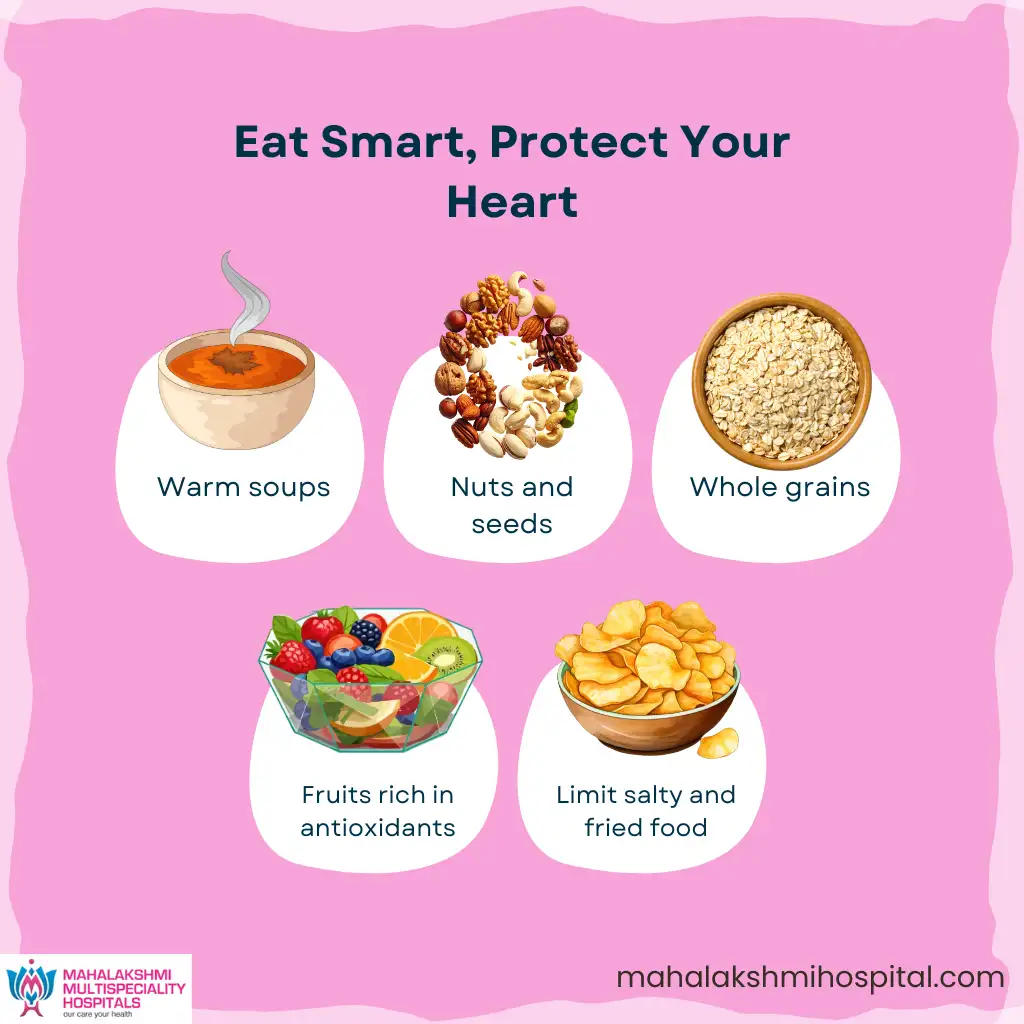
- Eat on time: Have warm, balanced meals to maintain energy and prevent sudden drops in body temperature.
- Stay hydrated: Drink enough water even if you don’t feel thirsty during winter.
- Avoid smoking: Cold air plus smoking narrows the blood vessels quickly.
- Manage stress thoughtfully: Deep breathing, meditation, and short breaks can keep your heart calm.
These habits help your body adjust smoothly to winter changes and reduce the pressure cold air puts on your heart. With consistent care, you can lower the chances of facing a heart attack in Winter, especially during sudden temperature shifts.
What Immediate Action Should You Take?
If someone shows signs of a heart attack, take action without waiting. Quick steps can save a life, especially during a heart attack in Winter when symptoms may feel stronger.
Do this right away:
- Call emergency medical help immediately. Do not try to drive the person yourself unless no help is available.
- Help them sit in a comfortable position. Keep their back supported and shoulders raised to ease breathing.
- Loosen tight clothing. This helps the chest expand freely.
- Keep the person calm and still. Movement increases the heart’s workload.
- Start CPR if the person becomes unconscious. Push hard and fast in the center of the chest.
These simple steps help you stay in control, reduce panic, and protect the person until medical help arrives. Quick action is especially important for those at risk of heart disease in winter, as timely support can make a real difference in recovery.
Conclusion
Winter brings extra challenges for the heart, especially when the temperature drops suddenly. Knowing how cold weather affects your heart, the warning signs to watch for, and the right steps to stay safe can make a big difference. Simple habits like staying warm, managing daily stress, and seeking help early can protect your health. Now that you know the reason why heart issues spike in winter, you can take better care of yourself and reduce the risk of a heart attack in Winter. Stay warm, stay aware, and listen to your body.