

If you have ever woken up at 2 AM gripping your leg in discomfort, you already know how frustrating knee pain at night can be. It disrupts your sleep, drains your energy, and leaves you dreading bedtime. Whether the pain is a dull ache, a sharp sting, or a throbbing pressure, nighttime knee discomfort is more common than most people realise and it is often a sign that your body needs attention. This guide is written by health content specialists with input from physiotherapy practice insights to help you understand why this happens, what it means, and most importantly how to relieve knee pain at night with practical, evidence informed steps.
What is Knee Pain at Night?
Understanding Night Time Knee Discomfort
Knee pain at night refers to discomfort, aching, stiffness, or throbbing in or around the knee joint that worsens during the evening hours or while you are lying down. Unlike daytime pain that tends to appear during movement or physical activity, nighttime knee pain often surfaces even when you are completely still. It can affect one or both knees and may range from mildly annoying to severe enough to prevent sleep entirely.
Why Pain Feels Worse at Night
There is a genuine physiological reason for this. During the day, your brain is occupied with tasks, conversations, and movement all of which compete with pain signals. At night, that mental noise fades, making your nervous system more sensitive to pain. In addition, lying still reduces blood flow and joint lubrication, which can intensify the sensation of discomfort. Some people also experience leg pain below the knee at night due to referred pain from the knee joint or surrounding structures.
Common Causes of Knee Pain at Night
- Osteoarthritis: Osteoarthritis is one of the leading causes of knee pain at night, particularly in adults over 50. This degenerative joint condition causes the cartilage that cushions the knee to wear down over time. As cartilage thins, bones begin to rub against each other, triggering inflammation and pain. At night, when the joint is no longer moving and synovial fluid circulation slows, the stiffness and aching often intensify.
- Rheumatoid Arthritis: Rheumatoid arthritis (RA) is an autoimmune condition in which the immune system mistakenly attacks the joint lining. Unlike osteoarthritis, RA can affect people of any age and typically causes symmetrical joint pain both knees are often affected simultaneously. The inflammation associated with RA tends to peak in the early morning hours, making nighttime and pre dawn particularly painful.
- Bursitis: The knee contains small, fluid filled sacs called bursae that cushion the joint. When these become inflamed often due to repetitive pressure, kneeling, or injury the condition is called bursitis. It produces a localised aching or burning sensation that becomes more noticeable when you are resting. Prepatellar and pes anserine bursitis are the types most commonly associated with nighttime discomfort.
- Tendinitis: Tendons connect muscle to bone, and when they become inflamed through overuse or sudden strain, the result is tendinitis. Patellar tendinitis sometimes called jumper’s knee commonly causes aching pain just below the kneecap that worsens after activity and tends to linger into the night.
- Gout: Gout is a form of inflammatory arthritis caused by the build up of uric acid crystals in the joints. While the big toe is most commonly affected, gout can also strike the knee, producing sudden, severe pain often in the middle of the night. The attacks can feel like a burning, crushing sensation and may be accompanied by swelling and redness.
- Knee Injuries and Overuse: Sports injuries, falls, or even repetitive daily movements can cause ligament sprains, meniscus tears, or cartilage damage. These injuries often present as knee pain at night because that is when the adrenaline fades and the inflammatory response peaks. Overuse injuries from running, cycling, or climbing stairs are especially common culprits.
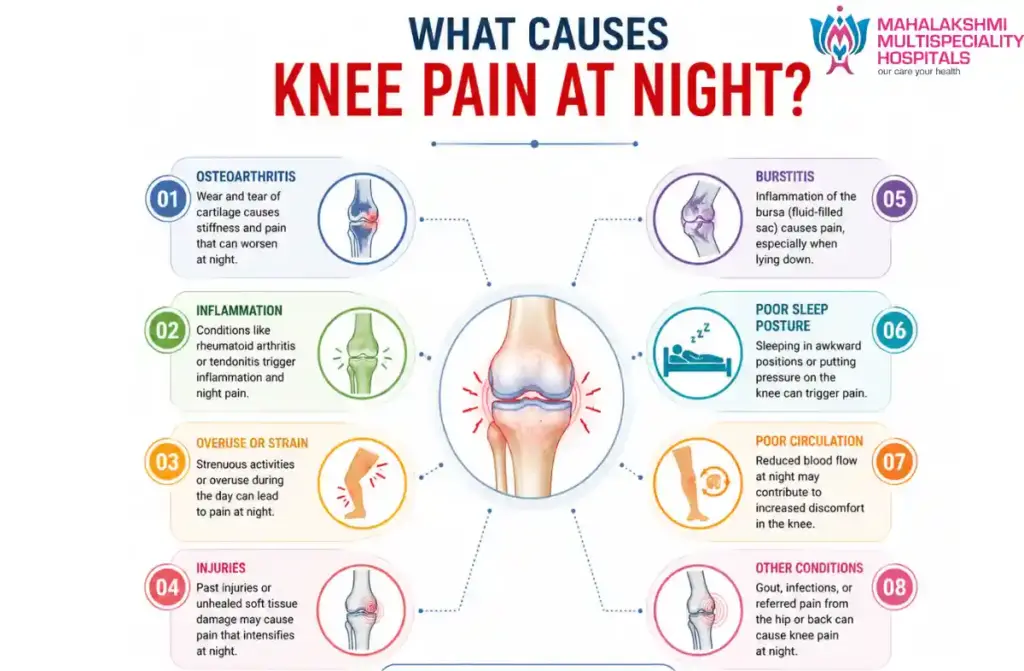
Why Knee Pain Gets Worse at Night
- Reduced Movement and Joint Stiffness: When you sleep, your knee stays in the same position for hours at a time. This lack of movement allows joint fluid to pool, reduces the natural lubrication of the cartilage, and causes the muscles around the knee to tighten. The result? You wake up or stir in the night to find your knee stiff and painful.
- Increased Awareness of Pain Signals: Pain is partly a matter of attention. During the day, cognitive stimulation and physical activity suppress pain perception through a process known as descending pain inhibition. At night, this natural suppression fades, meaning even moderate pain levels feel more intense and harder to ignore.
- Changes in Blood Circulation: Lying still for extended periods can affect blood flow to the lower limbs. Reduced circulation means less oxygen and fewer anti inflammatory compounds reaching the knee tissues, which can heighten pain sensitivity. This is one reason some people notice leg pain below the knee at night specifically, as the smaller vessels below the joint are particularly sensitive to changes in circulation.
- Inflammation and Fluid Build up: Inflammatory conditions cause the knee to produce excess synovial fluid. When you are upright and active, gravity helps distribute this fluid. Lying down can cause it to accumulate, increasing pressure within the joint capsule and producing that recognisable throbbing sensation.
Symptoms Associated with Night Knee Pain
- Throbbing or Aching Pain: A steady, rhythmic throb or dull ache is the hallmark of knee pain at night caused by inflammatory conditions like arthritis or bursitis. It tends to be constant rather than sharp and is often worse in cold weather.
- Swelling Around the Knee: Noticeable puffiness or warmth around the knee, especially when you wake up, can indicate fluid accumulation or an active inflammatory process. Even mild swelling can compress nearby nerves and blood vessels, adding to the pain.
- Stiffness after Rest: If your knee feels locked, rigid, or difficult to bend when you first move after sleeping or sitting, this morning stiffness is a classic sign of arthritis or bursitis. It usually eases after a few minutes of gentle movement.
- Burning or Sharp Sensation: A burning or sharp, shooting pain may suggest nerve involvement either from direct nerve compression or referred pain from the lumbar spine. Some people experiencing leg pain below the knee at night find that the pain actually originates from the lower back or hip, radiating downward.
- Difficulty Sleeping: Chronic nighttime knee pain creates a sleep disruption cycle: pain wakes you up, you struggle to find a comfortable position, your sleep quality deteriorates, and poor sleep in turn reduces your pain tolerance the following night. Addressing the knee pain directly is essential to breaking this cycle.
How to Relieve Knee Pain at Night
- Best Sleeping Positions for Knee Pain: One of the most effective ways to relieve knee pain at night is to adjust your sleeping position. Sleeping on your back is generally recommended, as it keeps the spine and joints in a neutral alignment. Avoid sleeping with a deeply bent knee, as this compresses the joint and can worsen stiffness. If you are a side sleeper, try not to stack your knees directly on top of each other without support.
- Using Pillows for Knee Support: Place a firm pillow under your knees when lying on your back to maintain a slight bend that reduces strain on the joint. If you sleep on your side, place a pillow between your knees to prevent your top knee from rotating inward and creating uneven pressure. This simple adjustment can make a significant difference in comfort level overnight.
- Hot and Cold Therapy: Applying an ice pack wrapped in a cloth for 15 to 20 minutes before bed can reduce acute inflammation and numb sharp pain. For chronic stiffness or muscle tension, a warm compress or heat pad helps relax the tissue around the joint. Alternating between the two can be particularly effective. This is one of the most accessible ways to relieve knee pain at night without medication.
- Gentle Stretching before Bed: Performing 5 to 10 minutes of gentle knee stretches before lying down can significantly reduce nighttime stiffness. Focus on quadriceps stretches, hamstring lengthening, and calf stretches to release tension in the muscles that directly support the knee. Avoid deep squats or high impact movements close to bedtime.
- Over the Counter Pain Relief Options: Non steroidal anti inflammatory drugs (NSAIDs) such as ibuprofen can reduce both pain and inflammation when taken as directed. Topical gels containing diclofenac or menthol offer targeted relief without systemic side effects. Always consult a pharmacist or doctor before starting any new medication, particularly if you have other health conditions.
Lifestyle Changes to Reduce Night Knee Pain
- Maintaining a Healthy Weight: Every kilogram of excess body weight places approximately three to five additional kilograms of force on the knee joint during movement. Reducing body weight even modestly can decrease inflammation, slow cartilage degeneration, and dramatically reduce the frequency and intensity of nighttime knee pain.
- Regular Low Impact Exercise: Swimming, cycling, yoga, and walking on soft surfaces strengthen the muscles around the knee without overloading the joint. Strong quadriceps and hamstrings act as shock absorbers, reducing the mechanical stress on the knee itself. Consistent, moderate exercise is one of the most powerful long term tools against knee pain at night.
- Avoiding Late Night Strain on Knees: Activities like climbing stairs, squatting to lift heavy items, or even prolonged standing in the hours before bedtime can trigger inflammatory responses that peak during the night. Try to complete high demand physical activities earlier in the day and allow time for recovery before sleeping.
- Choosing the Right Mattress and Support: A mattress that is too soft can cause your hips and knees to sink, misaligning the spine and creating pressure on the knee joint throughout the night. A medium firm mattress that supports your natural body contours, combined with appropriate pillow placement, can meaningfully reduce nighttime discomfort.
When to See a Doctor
- Persistent Pain for Weeks: If knee pain at night has persisted for more than two to three weeks without improvement, it is time to seek professional evaluation. Chronic pain often signals an underlying condition that will not resolve on its own and may worsen without treatment.
- Severe Swelling or Redness: Significant swelling, warmth, or redness around the knee especially if it appears suddenly could indicate infection, gout, or a serious inflammatory condition. These warrant urgent medical attention.
- Difficulty Walking or Bending: If your knee is locking, giving way, or preventing normal movement, the structural integrity of the joint may be compromised. Meniscus tears, ligament injuries, or advanced arthritis can all cause these symptoms.
- Signs of Infection or Fever: A fever combined with knee pain is a red flag for septic arthritis a bacterial infection of the joint that requires immediate medical treatment. Do not delay seeking care if you experience both symptoms simultaneously.
Diagnosis and Medical Treatments
- Physical Examination and Medical History: A doctor will begin by reviewing your symptoms, activity levels, medical history, and any previous knee injuries. They will assess range of motion, areas of tenderness, and stability of the joint to narrow down the likely cause.
- Imaging Tests (Xray, MRI): Xrays are useful for identifying bone changes associated with arthritis, while MRI scans provide detailed images of soft tissue structures including cartilage, ligaments, and tendons. These tests help confirm the diagnosis and guide treatment decisions.
- Physiotherapy and Rehabilitation: Physiotherapy is often the first line treatment for most non surgical knee conditions. A qualified physiotherapist will design a personalised programme that combines strengthening, flexibility, and manual therapy to address the root cause of your nighttime knee pain and restore normal function.
- Medications and Injections: In addition to oral NSAIDs, doctors may prescribe corticosteroid injections to directly reduce inflammation within the joint. Hyaluronic acid injections, which lubricate the knee, are another option for osteoarthritis patients. For rheumatoid arthritis, disease modifying antirheumatic drugs (DMARDs) can reduce overall inflammation.
- Surgical Treatment Options: Surgery is considered only when conservative treatments have failed. Options range from arthroscopic procedures to repair torn cartilage or ligaments, to partial or total knee replacement for advanced arthritis. Recovery from knee surgery typically involves a structured physiotherapy programme lasting several months.
Prevention Tips for Knee Pain at Night
- Strengthening Knee Muscles: Building strength in the quadriceps, hamstrings, glutes, and calves provides crucial support for the knee joint. Simple exercises such as wall sits, step ups, and resistance band work can be done at home and take less than 20 minutes per day.
- Proper Posture and Movement: Maintaining good posture when sitting, standing, and moving reduces unnecessary stress on the knee. Avoid locking your knees when standing for long periods, and use proper lifting technique bending at the hips and knees rather than the waist.
- Warm up before Physical Activity: A thorough warm up increases synovial fluid circulation, raises tissue temperature, and prepares the joint for the demands of exercise. Even a 5 minute brisk walk followed by dynamic stretching can significantly reduce the risk of post exercise knee pain at night.
- Managing Chronic Conditions Early: If you have been diagnosed with diabetes, obesity, gout, or autoimmune conditions, proactive management is critical. These systemic conditions directly influence inflammation levels throughout the body, including in the knee joint. Regular check ups and adherence to treatment plans can prevent progressive joint damage.
Conclusion
Living with knee pain at night is both exhausting and demoralising but it does not have to be your normal. Whether the underlying cause is arthritis, bursitis, an old injury, or lifestyle factors, there are proven steps you can take tonight to sleep more comfortably and protect your knee long term.
Start with the basics: adjust your sleeping position, apply cold or heat therapy, and stretch before bed. If your pain is persistent, seeking professional physiotherapy or medical evaluation is the smartest investment you can make in your quality of life. Understanding the causes of knee pain at night and acting on that knowledge puts the power back in your hands and gives you the best chance of waking up pain free.